



Blog
AutomotiveEmbedded Engineering
12 Nov 2026•6 min read
Automotive OTA Updates: Building Scalable Platforms for Software-Defined Vehicles
By KaliCharan Manchikanti

Digital transformation or DX can be defined as bringing cultural, organizational, and operational changes in the organization, and across entire ecosystem through digital technologies, processes, and competencies across all function levels.
Over the past few years, Japanese companies have been focusing on digital transformation and modernizing their businesses to accelerate their growth. Pandemic gave an opportunity to further accelerate the transformation for the organizations.
Current scenario: Digital Transformation is serious business
Not just businesses, but even the Government of Japan is showing a keen interest in digital transformation and sees that as an opportunity to drive up productivity and build a stronger nation. They have set up an ambitious plan called Society 5.0 which is defined as ‘a human-cantered society that balances economic advancement with the resolution of social problems by a system that highly integrates cyberspace and physical space’. In order to meet this objective they aim to integrate cyberspace & physical space, use technologies such as AI, IoT and Robotics.
However, certain structural challenges such as the ageing population and increasing skills gaps have hindered their digital transformation efforts. According to IMD’s Digital Competitiveness metric 2021, digital talent in Japan is just 1% of its entire workforce and the country ranks 28 in digital and global competitiveness. Further delays in digital transformation could jeopardize their position as the third-largest economy.
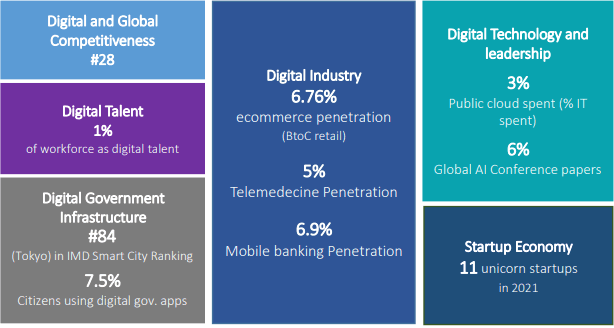
Japan Digital Score Card, Source: Deloitte
Improvement in workforce productivity especially in the areas of digital experiences has been a challenge for several years. Japan has a digital workforce productivity of 7.6 as compared to US which is at 13.3.
I have lived and worked in Japan for almost a decade and my areas of expertise span across IT Consulting, large-scale Digital Transformations, bootstrapping IT setup and scaling it across organizations to drive business growth. Based on my interactions with business and technology stakeholders across leading organizations in Japan, I would like to explain how this problem can be tackled efficiently.
Contents
McKinsey’s recent report on Transformation Change says that only 16% of digital transformations are successful. Lack of clear strategy could be one of the reasons for such a low rate. The ideal approach would be to start with a clear strategy. Start with knowing the ‘why’. For example, ask yourself why is digital transformation necessary? Will it increase the revenue or decrease the overall OPEX? Knowing the answer to the ‘why’ will give you a head start to a smooth and successful implementation. It is important to involve the Business & IT Strategy teams. The business strategy is the outcome that the company plans to achieve through transformation. The IT strategy involves the technologies that will be used to make the transformation successful.
Actionable tips
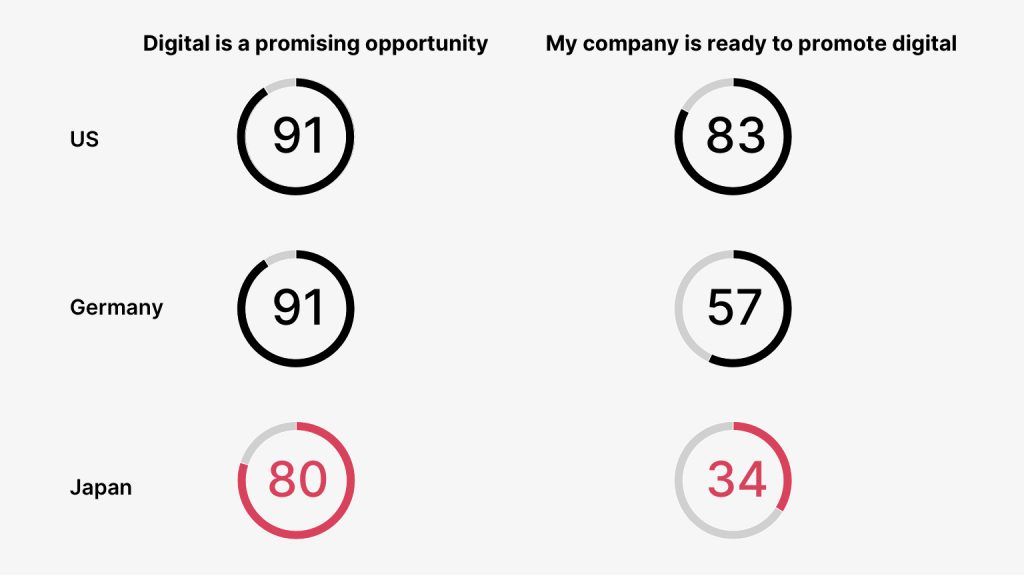
Willingness to change is an important factor contributing to the success of Digital Transformation. Change in the mindset is very much required to improve the adoption of Digital Principles in running the IT of organizations.
According to McKinsey’s research, two out of three Japanese managers feel they are not fully prepared to undertake digital transformation projects. There’s also the fear of failure, as only 16% of projects in Japan have been successful. Getting executive and stakeholder buy-in is vital to greenlight the project with adequate budget and resource allocation.
Actionable tips
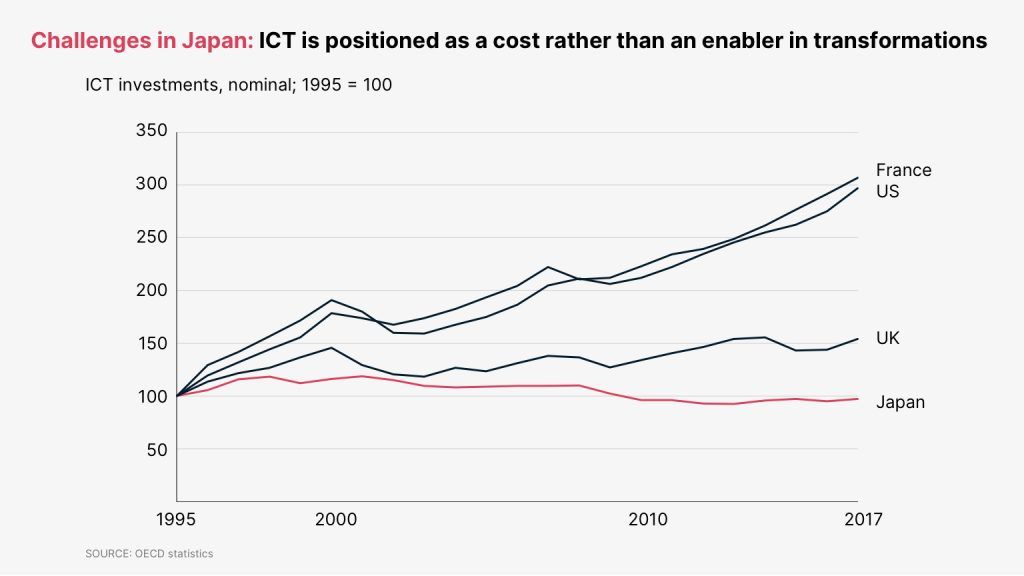
Call it a symptom of ageing demography or the dynamic nature of technologies that change quickly, Japan has a shortage of skilled resources. 68% of Japanese companies cited human resources shortage as a challenge. The reports showed that the country has a massive shortage of artificial intelligence and data analytics specialists and a major factor for this problem is the lack of funding and support on new investments in digital areas. Cloud Engineering, Artificial Intelligence, Analytics is expected to grow to 15.6 million and it is high time for the Japanese Organizations to catch up with this speed.
Actionable tips
Traditionally, Japanese companies rely heavily on external partner companies for system integration and other tasks that are ideally done by the in-house teams. However, most of these external partner companies have a tough time understanding the business needs and have limited ability to perform a full-scale digital transformation. It is important to evaluate the technical partner on multiple fronts before you select the right partner.
Actionable tips
What the CXOs expect in their partner companies before choosing one and why Robosoft can be the preferred choice.
There are hundreds of service vendors each in SaaS, PaaS, XaaS, pure play services IT play. Do you know that there are over 360 vendors for PaaS offerings alone? Companies are spoiled for choices. They can choose from an array of technology options and service providers. While this is good, so many choices can overwhelm you. CXOs often get caught up in the decision-making process.
Actionable tips
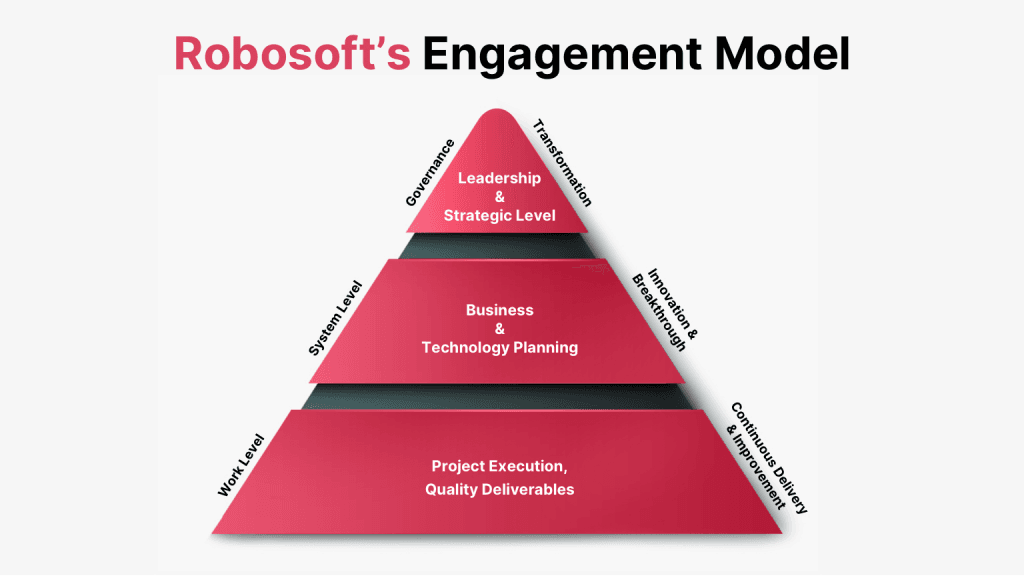
Enterprises want to make impactful strides in terms of scalable digital transformation and the Government of Japan is also pushing them to make efforts to deliver results. Despite the challenges organizations are well poised to take the next big leap. The right technology partner can accelerate your digital transformation project and help you realize its full potential.

By Prasanna Subramaniam

RESOURCES
Automotive OTA Updates: Building Scalable Platforms for Software-Defined Vehicles
By KaliCharan Manchikanti

AI in Travel: Enterprise Use Cases Across Booking, Operations and Customer Experience
By Janardhana T
More Models, Fewer Decisions: How to Scale AI Adoption Without Scaling the Bill
By Simon Matar
We are seeing the same pattern with our clients. Once AI adoption reaches a certain point, costs rise faster than the annual budget can absorb. So what drives these costs, and how do you keep adoption going without the budget...
Engineering
Human
Experiences
Let’s get in touch
We craft intuitive digital products that blend user-centric design with robust technology. From UX/UI to full-stack development, we help brands turn ideas into scalable solutions.