BACKGROUND
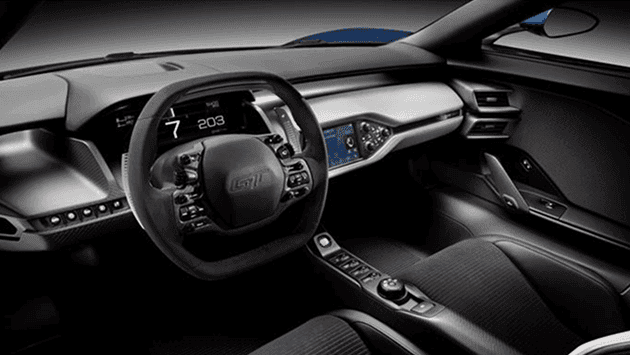
When Ford reintroduced the legendary Ford GT, the goal was not just to revive an icon but to redefine the modern supercar experience. With a 660-horsepower EcoBoost V6 and carbon-fiber architecture, the vehicle demanded a digital cockpit that matched its engineering precision.
We designed and developed the Human-Machine Interface (HMI) and digital driver display, creating a cockpit experience that reflects the car’s performance DNA.
THE CHALLENGES
Addressing the
critical gaps

Design a digital cluster that seamlessly adapts across drive modes while maintaining clarity at high speeds.

Translate complex vehicle telemetry into clear, intuitive visuals that drivers can interpret instantly.

Create an interface inspired by racing performance and aviation cockpit systems.

Develop graphics, assets and animations optimized for high-performance automotive hardware.

Test and deploy the HMI within Ford’s SYNC Gen 3 infotainment framework while ensuring reliability and responsiveness.
THE CHALLENGES
Addressing the
critical gaps
Design a digital cluster that seamlessly adapts across drive modes while maintaining clarity at high speeds.
Translate complex vehicle telemetry into clear, intuitive visuals that drivers can interpret instantly.
Create an interface inspired by racing performance and aviation cockpit systems.
Develop graphics, assets and animations optimized for high-performance automotive hardware.
Test and deploy the HMI within Ford’s SYNC Gen 3 infotainment framework while ensuring reliability and responsiveness.

THE ROBOSOFT SOLUTION

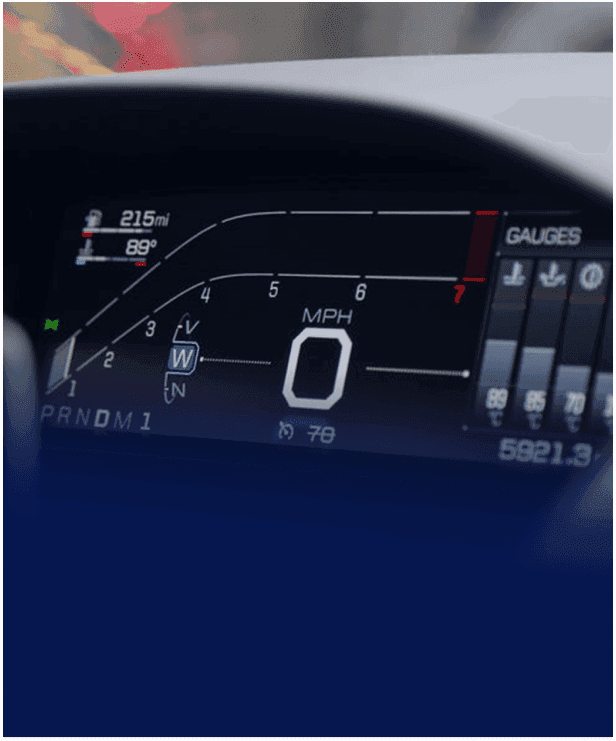
Drawing inspiration from fighter jet cockpits, the interface emphasizes bold numeric data, progressive tachometer visuals and high-contrast performance cues.

The display dynamically adapts across Wet, Sport and V-Max modes, adjusting layout density, tachometer behavior, color schemes and performance indicators.

Drivers can access additional metrics such as engine temperature, oil data and tire pressure through a layered interface without cluttering the main display.

End-to-end UX journeys, structured wireframes and progressive high-fidelity designs ensured usability and technical feasibility.

Display assets, animated transitions and interactive prototypes were developed and tested in CGI studio environments before final deployment.
THE ROBOSOFT SOLUTION
Drawing inspiration from fighter jet cockpits, the interface emphasizes bold numeric data, progressive tachometer visuals and high-contrast performance cues.
The display dynamically adapts across Wet, Sport and V-Max modes, adjusting layout density, tachometer behavior, color schemes and performance indicators.
Drivers can access additional metrics such as engine temperature, oil data and tire pressure through a layered interface without cluttering the main display.
End-to-end UX journeys, structured wireframes and progressive high-fidelity designs ensured usability and technical feasibility.
Display assets, animated transitions and interactive prototypes were developed and tested in CGI studio environments before final deployment.

Clear outcomes
that drive growth

Delivered a digital cockpit that reflects the supercar’s racing DNA.

Real-time, high-clarity visualizations ensure drivers can interpret critical data instantly.

Created a unique interface language aligned with Ford’s performance heritage.

Established a scalable framework adaptable for future vehicle programs.
Build automotive experiences that win in the market