



Blog
Media & Entertainment
8 Oct 2026•6 min read
The Broadcast Is Not the Test. It Is the Result of the Test.
By Abhishek Hegde
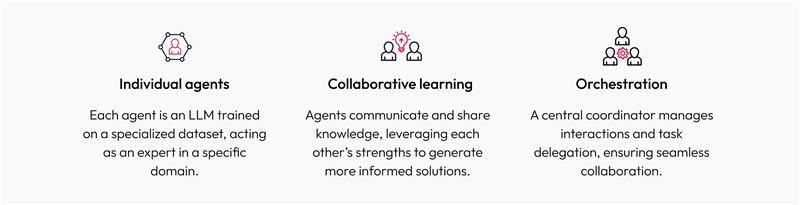
Large Language Models (LLMs) are powerful but struggle with complex, multi-step tasks that require reasoning, planning, or domain-specific expertise. Multi-agent systems address these limitations by structuring AI as a team of specialized agents, each handling a distinct function.
Some agents focus on real-time data retrieval, others on structured problem-solving, and some on refining responses through iterative learning.
So, how do these AI agents interact, and what makes them a game-changer for enterprises leveraging AI-driven decision-making? Let’s explore.
 Popular multi-agent frameworks
The image below illustrates the power of multi-agent LLM collaborating to solve complex tasks across various domains. It highlights six scenarios: math problem-solving, retrieval-augmented chat, decision-making, multi-agent coding, dynamic group chat, and conversational chess. By automating chat among multiple capable agents, these systems can collectively perform tasks autonomously or with human feedback, seamlessly incorporating tools via code when required.
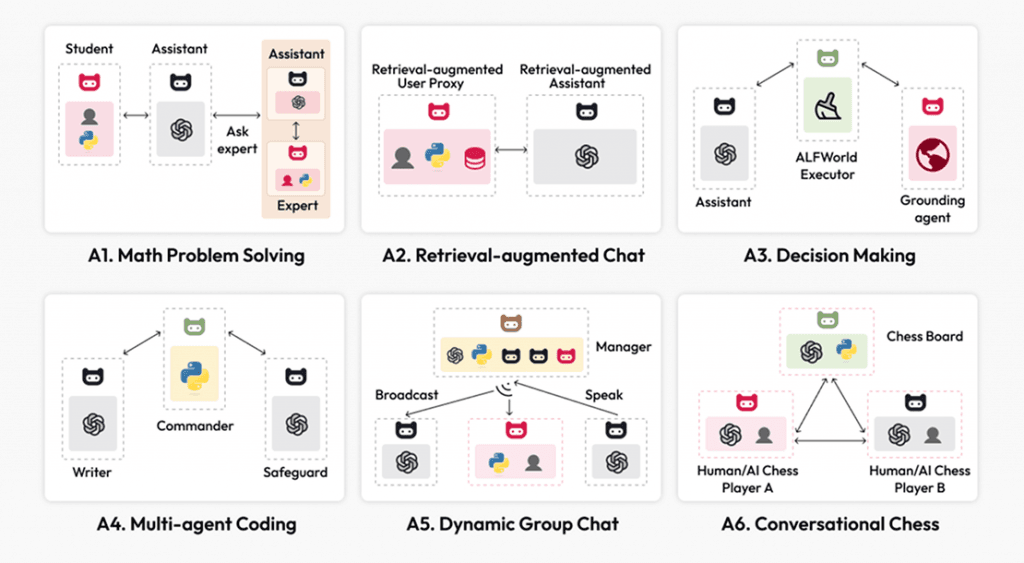
Image: Automated agent chat examples of applications built using the multi-agent framework
Each scenario demonstrates specialized agents or components, such as assistants, experts, managers, and grounding agents, working together to enhance problem-solving, decision-making, and task execution. This demonstrates how multi-agent systems can leverage complementary skills to enhance problem-solving, decision-making, and task execution in various domains.
Let’s take a food ordering use case:
Current process (too many steps) ↓
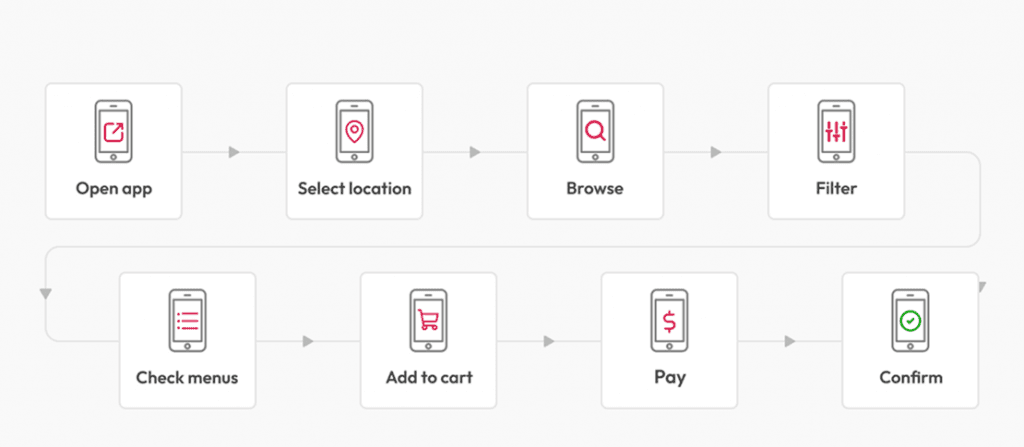
AI-powered future (frictionless experience)
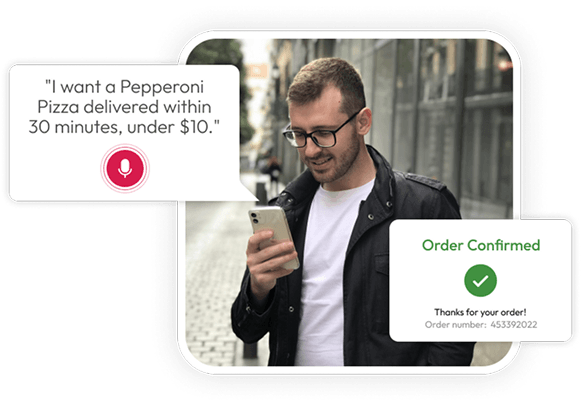
AI understands, searches, personalizes, and completes the order—all in seconds.
The multi-agent system handles the budget, dietary preferences, and location and finalizes the order. Minimal user input. Just confirm with a simple “Yes.”
This way we’re shifting from clumsy interfaces to intuitive conversations. The future isn’t about more features. It’s about making AI feel truly effortless, intelligent, and personal.
Now, imagine this seamless AI-driven approach transforming industries:

Enterprises should build agent-driven solutions when dealing with proprietary data or specialized workflows. This offers tighter control, customization, and strategic value. Begin with internal use cases to refine processes, establish guardrails, and build trust. As workflows stabilize, scale to customer-facing use cases for maximum impact. Focus on high-value areas where multi-agent systems can significantly enhance efficiency and user experience.
Ready to leverage multi-agent systems for next-gen LLM-powered chatbots or any other AI/ML initiatives? Our experienced team deeply understands your needs, tracks market trends, and delivers tailored, high-impact solutions using the right multi-agent framework.

By Manish Kumar Babul

RESOURCES
By Abhishek Hegde

By Ivan Pinto
Most conversations about AI delivery focus on what the delivery partner brings to the engagement. The methodology, the toolchain, the engineering practice, the governance standards. We have written elsewhere about what Robosoft brings, and about the standard we have built ARIA around.

By Srinidhi Rao
Most organizations evaluating AI delivery partners are asking the wrong question. They tend to ask which tools a firm uses, when the question that actually matters is what standard the firm is operating to.
A tool is a productivity bump. A standard is what shapes whether the work compounds or stays flat. It is, in our experience, much of why AI projects fail to move past the productivity bump. Firms producing genuinely different outcomes with AI today are doing so because the same operating rules run through every decision, every gate and every phase of the work.
Engineering
Human
Experiences
Let’s get in touch
We craft intuitive digital products that blend user-centric design with robust technology. From UX/UI to full-stack development, we help brands turn ideas into scalable solutions.