Every major streaming event still produces the same headlines. Buffering. Outages. Subscriber revolt. The technology to prevent this has existed for years. The problem is not capability. It is when teams choose to use it.
The pattern is consistent enough now that it should prompt a harder question.
A major sporting event arrives on a streaming platform. The audience arrives with it. The platform buckles. Subscribers who paid specifically for this moment spend it watching a loading screen or reading angry threads from people in the same situation. The platform apologizes. The engineers work through the night. By the time the fix is live, the moment has passed.
This has happened often enough, across enough platforms, that it cannot be attributed to bad luck or unusual circumstances. It is a structural problem, and its cause is almost always the same: teams are treating the broadcast as the test. They are finding out whether the platform was ready at the exact moment readiness can no longer be established.
The broadcast is not the test. It is the result of the test. And the test has to happen months before the event, not during it.
The false confidence that predictable events create
For most live sports events, the pattern of demand is predictable. A schedule is published. Traffic builds toward a known peak. If something goes wrong, there are gaps between fixtures that give engineering teams room to diagnose, fix, and redeploy before the next event.
That rhythm creates a false confidence about what live streaming actually demands at scale. Teams learn to respond in real time because real time has always offered them room to respond. They carry that assumption into events that offer no such room.
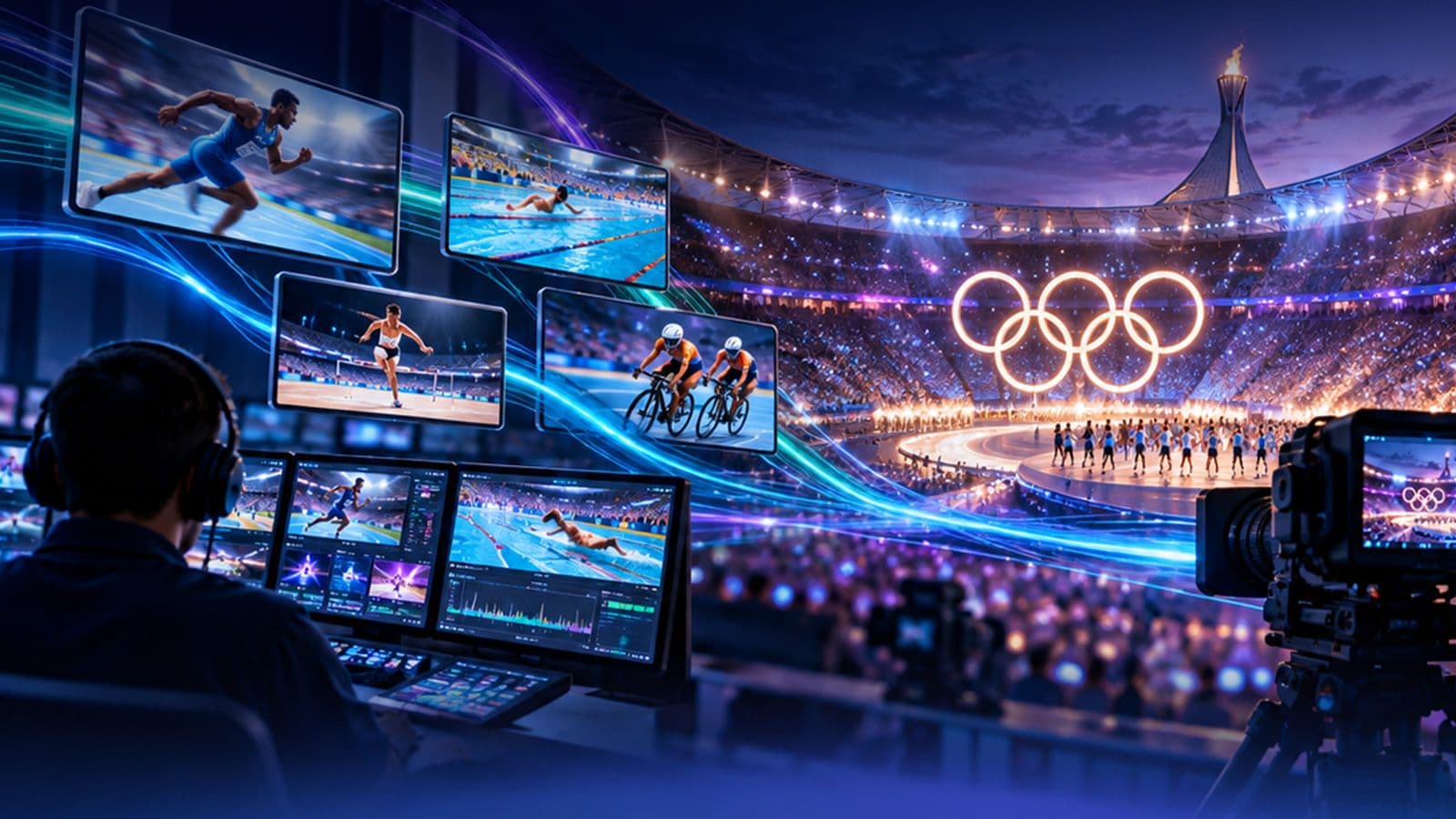
The Olympics is the most extreme version of a different problem entirely. Three weeks. Dozens of simultaneous disciplines. Audiences that move between sports in ways no model fully predicts. A national team reaching an unexpected final sends a surge of viewers to a channel that was quiet minutes earlier. A world record attempt in the pool pulls fans away from a tennis final mid-set. There are no gaps. No quiet windows. No moment between events to catch a problem and fix it before the next wave of viewers arrives.
By the time an issue surfaces during a live Olympic broadcast, the moment it affected has already passed for a substantial part of the audience. There is no recovery. There is only the post-event apology.
The only answer is to have nothing left to fix when the event goes live.
The opening ceremony was the deadline
When Robosoft partnered with Discovery+ and Eurosport to broadcast the Paris 2024 Olympics across EMEA, the governing principle was straightforward: the opening ceremony was not a starting gun. It was a deadline. Everything that needed to be true about the platform had to be true before it.
Work began months in advance. A rebuilt player engine was integrated across EMEA devices long before the Games were a live pressure. The platform was tested at the concurrent viewership that a major Olympic day actually produces: multiple medal events running simultaneously, audiences spread across a full range of device types and connection speeds, demand spikes arriving without warning and without precedent.
Every deployment configuration was finalized. Every monitoring protocol was in place. The team had already seen, in controlled conditions, what the system did under the kind of pressure Paris would produce. By the time the opening ceremony aired, there was nothing left to figure out. The broadcast became a confirmation of work done.
Olympic fans are a different problem entirely
Reliability is the precondition. It is not the destination.
Olympic fans do not behave like club supporters. They follow their country across whatever disciplines their athletes are competing in that day. They check in on swimming during an athletics session. They discover a sport mid-event that they had no plan to watch. Their attention is fragmented across a three-week schedule in ways that bear no resemblance to a soccer fan following a single club through a season.
The product built for Paris 2024 was designed around that reality. Following two disciplines at once used to mean two screens and two separate experiences. Multi-Match and Multi-Camera removed that friction entirely, letting fans move between live events from inside a single player without losing their place.
A medal moment happens in one discipline while a fan is watching another. Real-Time Event Alerts reached fans before the news did, surfacing the moment while there was still a moment to catch.
A viewer who hits a playback problem mid-broadcast is not looking for a way to report it. They are looking for the stream to work. Live Feedback made both possible: viewers could flag issues from inside the broadcast without leaving it, and every report was triaged in real time by the team monitoring across EMEA for the full three weeks.
Paris 2024 ran without a single service interruption.
The preparation window is already closing
The 2028 Olympics go to Los Angeles. The next major rights cycle is already beginning for platforms across every sport. For any broadcaster or streaming platform carrying rights to a significant live event, the preparation window is the variable that determines the outcome, and it is the variable most consistently underestimated.
Teams that start early get to discover what they do not yet know while there is still time to act on it. They arrive at the event with a platform proven under real pressure, not simulated assumptions. The broadcast becomes confirmation. The audience experiences a match, a race, a final, not the seams of a product under strain.
Teams that start late do not just compress timelines. They compress the room to learn, to test, to correct, and to be certain. At the scale of an Olympic broadcast, that room does not return once the schedule goes live. The event will happen. The only question is whether the platform was ready for it or discovered, in public, that it was not.
Robosoft works with media and entertainment companies on the advance engineering and product work that major live events demand. If your team has a significant broadcast on the horizon, the right time to start that conversation is well before your audience is already watching.