


Blog
Media & Entertainment
8 Oct 2026•6 min read
The Broadcast Is Not the Test. It Is the Result of the Test.
By Abhishek Hegde
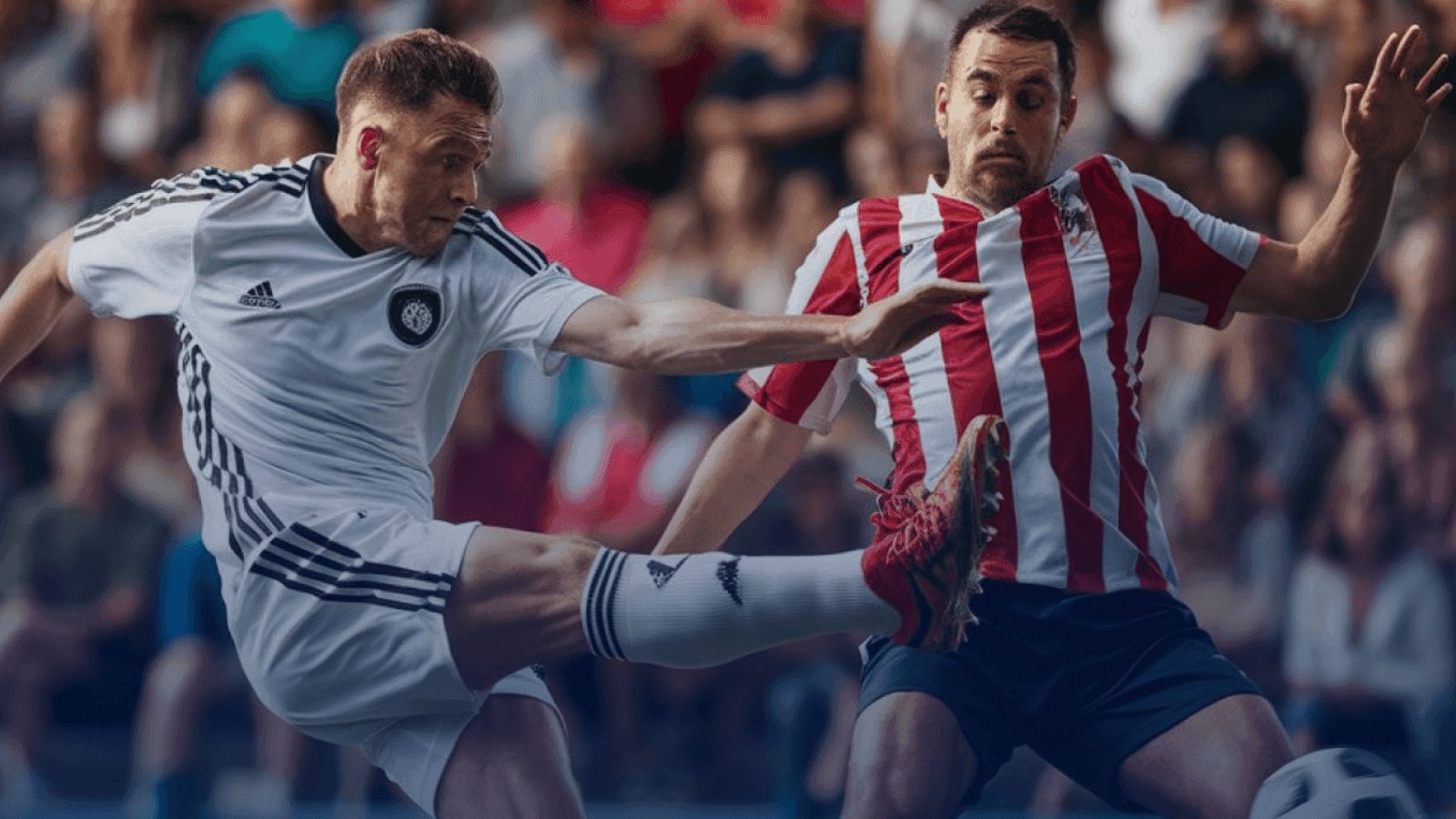
Streaming platforms have spent heavily acquiring live soccer rights. Fans are still leaving between tournaments. The problem is not the content. It is the product built around it.
There is a number that should concern every executive running a sports streaming platform. It is not viewership during a final. It is subscriber retention in the six weeks after one.
Fans subscribe for the tournament. They leave when it ends. The content did its job. The product did not.
This is the gap the industry has been slow to name: the distance between what a rights deal promises and what a product delivers. Closing it is not a content problem. It is a design problem, an engineering problem, and fundamentally a question of whether a platform was built for the fan or built for the broadcast.
Most were built for the broadcast.
For decades, broadcast television served one feed to everyone. The director chose the angle. The commentator chose what mattered. The viewer accepted what arrived. That was the deal, and it worked because there was no alternative.
Streaming promised something different: control, personalization, the ability to watch on your terms. Fans heard that promise and believed it. What they found, in many cases, was a broadcast dressed in a different interface.
One stream. One angle. No way to jump to the moment they missed without scrubbing through footage. No way to follow two matches at once without opening a second app. Notifications that arrived after their group chat had already moved on.
The technology to do better has existed for years. The gap is not capability. It is priority.
Research from WSC Sports found that 77% of fans multitask during live games. Ross Video's Definitive Guide to the Modern Sports Viewer found that 17% of European fans follow multiple broadcasts simultaneously, and 31% are messaging friends or browsing social media while a match is live. These are not edge cases. They are the mainstream behavior of the audience that every platform is competing for.
A platform that does not account for how this audience actually watches is not serving them. It is tolerating them.
When Robosoft worked with Discovery+, powered by TNT Sports, on UEFA Champions League and Europa League coverage across the UK and EMEA, the brief was not to build features. It was to understand how fans watch live football and close the gap between what they expect and what the platform delivers.
That starting point produced very different decisions.
A fan who arrives at the 60th minute is not looking for a progress bar. They are looking for the goal they missed. Scrubbing through an hour of footage is not a solution. It is a failure of the product to understand what the fan needs. Timeline Markers addressed that directly: goals, red cards, and VAR decisions accessible from inside the player, from any point in the match. The fan is never stranded in footage. They go straight to what matters.
A fan following two simultaneous fixtures has always faced the same forced choice: pick one and miss the other. That choice has always been a product failure, not an inevitability. Multi-Match and Multi-Camera removed it. Both live events from inside a single player. Any camera angle on any set piece, in a tap. The kind of control that used to sit in a broadcast director's gallery now belongs to the fan.
A fan away from their screen when a goal goes in will know about it within seconds from their group chat, from social media. The question for a platform is whether it reaches them before or after that noise. Live Event Alerts closed that gap. The notification arrives first. For a fan deciding in that moment whether to pull up the stream, being first is the difference between a click and a shrug.
There is a second gap that is less discussed but equally consequential: reliability. A Champions League quarter-final does not build its audience gradually. It arrives at full volume within minutes of kick-off, millions of concurrent viewers on every device type, and it does not offer a second chance if the platform is not ready.
Readiness is not something you confirm during a broadcast. By then, confirmation is too late. Before every major fixture in the UEFA season, Robosoft ran peak-engagement testing to confirm the platform could handle exactly that load, across every device type. Not as a final check. As the standard. If it was not confirmed ready, it did not go live.
The result across the full UEFA season: zero service interruptions.
Fans experienced a match, not a platform.
The next rights deal will not solve the retention problem. Neither will the one after that.
The fans who grew up watching on devices have a different relationship with attention than any previous generation of sports viewers. They do not choose a platform and commit to it. They choose an experience, match by match, moment by moment. If the experience does not feel built for them, they find one that does. Quickly, and without announcement.
Fan attention is the scarce resource. Content is abundant.
The platforms pulling ahead in live soccer are not the ones with the most rights. They are the ones that have understood this and built accordingly. The experience that makes a fan feel a platform was built around the way they watch is not something a rights deal provides. It is something a product team builds, deliberately, starting with the fan. Most platforms are not yet competing on fan experience. The ones that are pulling ahead.
Robosoft works with media and entertainment companies that have decided to compete on those terms. If that decision has already been made on your team, we should be part of it.

By Abhishek Hegde
Abhishek is a program and delivery professional with over 20 years of experience across digital platforms, OTT, retail technology, ERP, omnichannel and software delivery. At Robosoft Technologies, he leads large-scale OTT initiatives across AMER, EMEA and India, working with engineering, product, QA and DevOps teams to drive strategy, governance and delivery. He has led the Warner Bros. Discovery OTT portfolio covering Discovery+, TNT Sports and Bleacher Report, managing distributed teams and complex cross-platform releases. His experience also spans digital transformation and retail technology implementations across India and international markets.

RESOURCES
By Abhishek Hegde

By Ivan Pinto
Most conversations about AI delivery focus on what the delivery partner brings to the engagement. The methodology, the toolchain, the engineering practice, the governance standards. We have written elsewhere about what Robosoft brings, and about the standard we have built ARIA around.
By Srinidhi Rao
Most organizations evaluating AI delivery partners are asking the wrong question. They tend to ask which tools a firm uses, when the question that actually matters is what standard the firm is operating to.
A tool is a productivity bump. A standard is what shapes whether the work compounds or stays flat. It is, in our experience, much of why AI projects fail to move past the productivity bump. Firms producing genuinely different outcomes with AI today are doing so because the same operating rules run through every decision, every gate and every phase of the work.
Engineering
Human
Experiences
Let’s get in touch
We craft intuitive digital products that blend user-centric design with robust technology. From UX/UI to full-stack development, we help brands turn ideas into scalable solutions.