



Blog
AutomotiveEmbedded Engineering
12 Nov 2026•6 min read
Automotive OTA Updates: Building Scalable Platforms for Software-Defined Vehicles
By KaliCharan Manchikanti
The media & entertainment industry is undergoing a significant transformation driven by the rise of streaming services. Traditional TV packages are declining due to their high prices and bundles of channels that many people don’t watch. In their place, many streaming services offer consumers a la carte content at a lower cost.
This shift in the market is forcing media companies to rethink their distribution models and partnership strategies. To survive and thrive in the streaming era, they need to find ways to deliver their content to consumers in a way that is both convenient and affordable.
One trend is the rise of hybrid distribution models. This involves offering content through a combination of traditional and streaming channels. For example, a media company might make its content available on a streaming service and sell it to cable or satellite TV providers. This gives consumers more choice and flexibility in watching their favorite shows and movies.
Another trend is the growth of partnerships between media companies and technology giants. These partnerships can help media companies reach a wider audience and reduce costs. For example, Netflix has partnered with Microsoft to deliver its content to users via the Microsoft Cloud. This partnership will help Netflix scale its operations and improve its streaming service’s quality. Similarly, ESPN is in talks with other tech giants like Amazon and Apple as The Walt Disney Co. continues to search for a strategic partner for its sports streaming channels.
The future of the media and entertainment industry is uncertain, but one thing is sure: distribution models and partnership strategies will continue to evolve. As the industry adapts to the changing landscape, consumers will have more choices and control over their media consumption.
Warner Bros. Discovery and Amazon partnered to make HBO Max available on Amazon Prime Video Channels. This partnership exemplifies media companies partnering with tech giants to reach a wider audience, reduce costs, and consolidate the streaming industry.
Here are some specific predictions about how distribution models and partnership strategies in the Media and OTT space will evolve in the future:
The current market is overcrowded, with too many streaming services competing for a limited number of subscribers. This is driving up content costs and making it difficult for streaming services to profit. Some platforms merged or formed partnerships to counter this, bundling their services to offer subscribers more value.
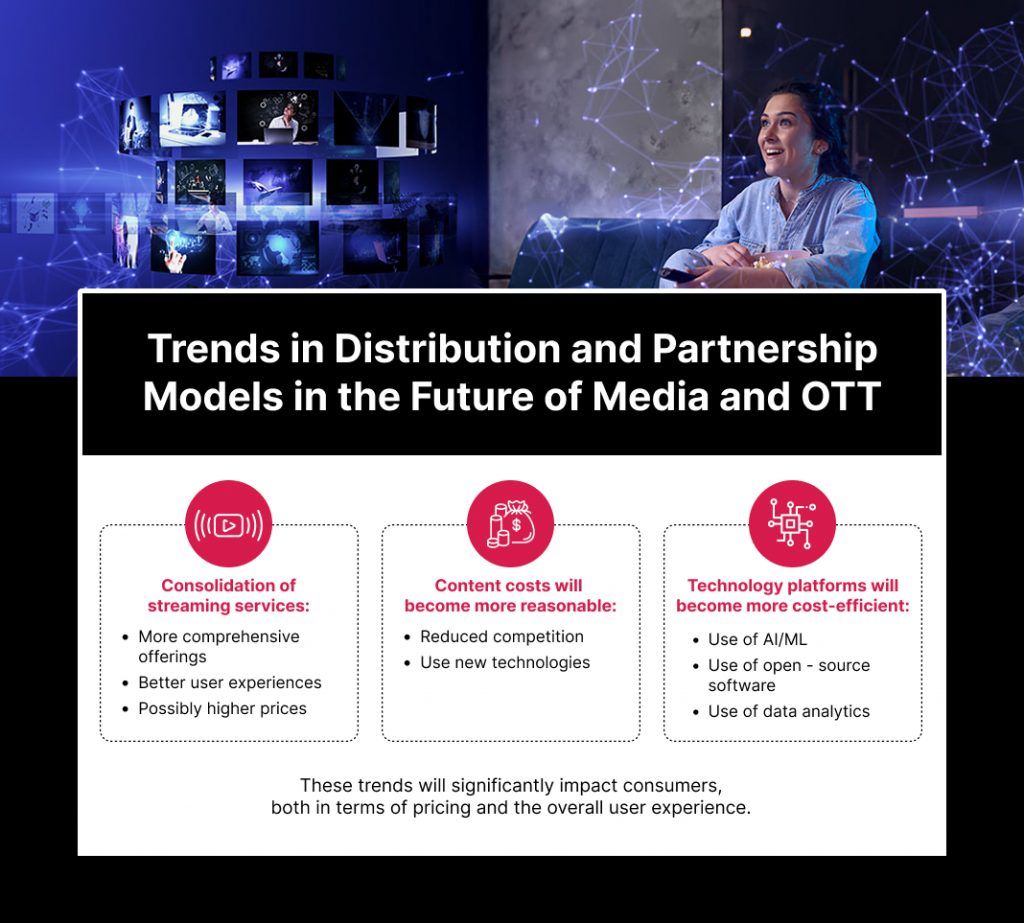
In the future, we will likely see consolidation in the market, with the weaker streaming services being acquired or shutting down.
As the market consolidates, content costs will likely come down. Fewer streaming services will compete for the same content, driving down prices.
This will make streaming services’ profit easier and offer consumers more competitive pricing.
The cost of streaming technology is also coming down. This will allow streaming services to offer a better user experience without increasing prices. This will be enabled through:
These emerging technologies like AI/ML, open-source software, and data analytics are reducing streaming costs and improving user experiences.
In addition to the trends mentioned above, a few other factors could shape the future of distribution and partnership models in the Media and OTT space. These include:
The trends discussed above will have a significant impact on consumers. Consolidating streaming services could lead to higher prices, but it could also lead to more comprehensive offerings and better user experiences. The rise of new technologies could open up new ways for consumers to watch their favorite content, and changing habits of consumers could lead to new subscription models and pricing options.
The streaming wars are consolidating and collaborating, with major players partnering to create more comprehensive offerings. Industry analysts believe consumers are now less willing to subscribe to multiple services, leading to a more sustainable model for the streaming ecosystem. Platforms are focusing on retaining existing subscribers through a focus on content.
While the streaming wars may not be over, there is a growing sense of resolution and stability in the industry. Consolidation, partnerships, and a focus on content have created a more sustainable streaming landscape. Viewers can expect continued competition and innovation, but the era of cutthroat battles for dominance gives way to a more balanced and content-driven future for streaming services.
The future of distribution and partnership models in the Media and OTT space is uncertain, but the industry is transforming significantly. The industry is adapting to the changing landscape and finding ways to deliver content to consumers conveniently and affordably. This is good news for consumers, who will have more choice and control over their media consumption. The trends and factors discussed above will all play a role in shaping the future of this dynamic industry.

By Syed Mehdi Abbas

RESOURCES
Automotive OTA Updates: Building Scalable Platforms for Software-Defined Vehicles
By KaliCharan Manchikanti

AI in Travel: Enterprise Use Cases Across Booking, Operations and Customer Experience
By Janardhana T
More Models, Fewer Decisions: How to Scale AI Adoption Without Scaling the Bill
By Simon Matar
We are seeing the same pattern with our clients. Once AI adoption reaches a certain point, costs rise faster than the annual budget can absorb. So what drives these costs, and how do you keep adoption going without the budget...
Engineering
Human
Experiences
Let’s get in touch
We craft intuitive digital products that blend user-centric design with robust technology. From UX/UI to full-stack development, we help brands turn ideas into scalable solutions.