


Blog
Travel & TransportationData & AI
5 Nov 2026•6 min read
AI in Travel: Enterprise Use Cases Across Booking, Operations and Customer Experience
By Janardhana T
Legacy modernization is the process of transforming outdated business technology systems, known as legacy systems, into modern infrastructure and functionalities. It is the process of updating or replacing outdated software using modern programming languages, software libraries, or protocols and giving a makeover for the digital age. This article outlines the blueprint for modernizing legacy systems and lists key benefits that accrue from this initiative.
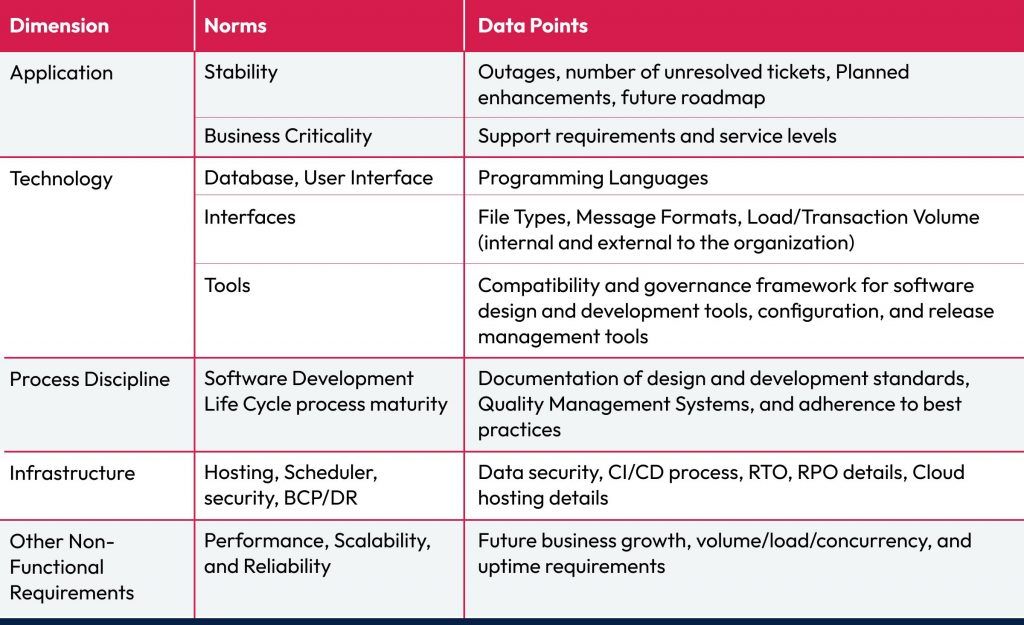
The legacy modernization exercise commences with an assessment of the existing application landscape to determine the ability of the existing technology systems (application and infrastructure) to support evolving business needs. A detailed roadmap is drawn up subsequently to complete the exercise. The assessment involves gathering data points around different aspects of the technology landscape. This is supplemented with structured interviews with key stakeholders representing business and technology to understand current pain points and future requirements.
Quantitative data delves into various platform dimensions, including application stability, business criticality, technology stack, process discipline, infrastructure, and non-functional requirements. Specific data points might include outage frequency, unresolved ticket counts, planned enhancements, technology stack details, interface protocols, data volumes, compatibility of software development tools, adherence to best practices, hosting configurations, disaster recovery plans, and performance scalability metrics.
Qualitative data gleaned through stakeholder interviews sheds light on future business goals, technology preferences, regulatory constraints, and pain points. This input enriches the quantitative analysis, painting a holistic picture of the current and future aspirations.
Armed with this comprehensive data, we embark on the analysis phase. This involves meticulously examining software code, database structures, and the interplay between quantitative and qualitative inputs. The culmination of this analysis is a robust blueprint for the legacy transformation exercise.
The blueprint addresses critical challenges and proposes targeted solutions, each delivering distinct benefits. For instance, monolithic architectures plagued by high ownership costs can be transformed into loosely coupled microservices, enabling simpler deployments and improved scalability. Performance bottlenecks can be tackled by introducing auto-scaled middleware and databases, paving the way for future business growth. Similarly, implementing caching layers and monitoring tools can enhance performance and operational efficiency.
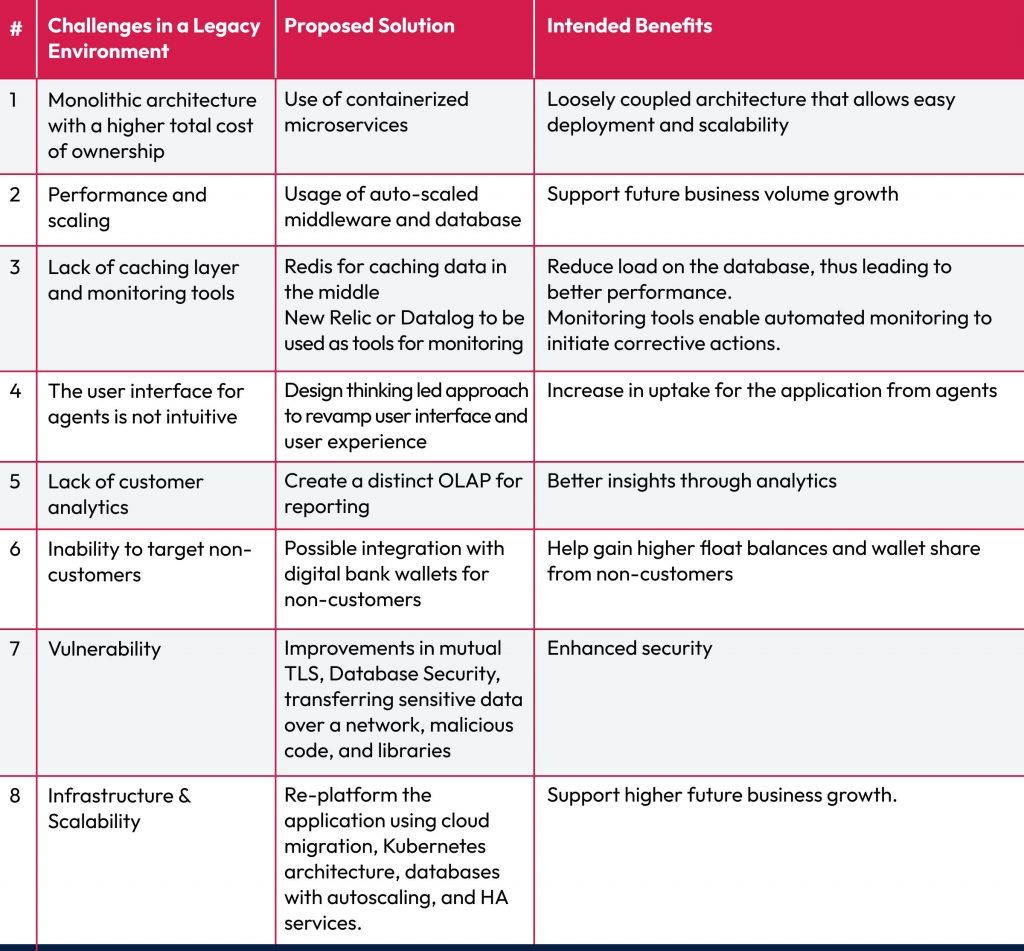
Some of the key benefits are listed below:
Legacy modernization holds lessons for the entire financial services industry. It demonstrates the power of technology to unlock economic potential, empower migrant workers, and strengthen local communities. By embracing innovation and adaptability, financial institutions can thrive in the competitive landscape and contribute to a more inclusive and equitable global economy. By partnering with a reliable and proven digital transformation partner, legacy modernization in one market can inspire and pave the way for similar advancements across the globe, ultimately benefiting communities and individuals.

By Mahesh Kumar

RESOURCES
AI in Travel: Enterprise Use Cases Across Booking, Operations and Customer Experience
By Janardhana T
More Models, Fewer Decisions: How to Scale AI Adoption Without Scaling the Bill
By Simon Matar
We are seeing the same pattern with our clients. Once AI adoption reaches a certain point, costs rise faster than the annual budget can absorb. So what drives these costs, and how do you keep adoption going without the budget...

The Software-Defined Vehicle Reset: How OEMs Must Rebuild for the Next Decade
By KaliCharan Manchikanti
Engineering
Human
Experiences
Let’s get in touch
We craft intuitive digital products that blend user-centric design with robust technology. From UX/UI to full-stack development, we help brands turn ideas into scalable solutions.