



Blog
AutomotiveEmbedded Engineering
12 Nov 2026•6 min read
Automotive OTA Updates: Building Scalable Platforms for Software-Defined Vehicles
By KaliCharan Manchikanti
Adding personal touches to the flight experience, such as priority boarding, customized menus, and prompt services, can create a memorable journey. Loyalty programs are essential to increase the stickiness of airline customers and maintain a brand’s customer base.
Studies emphasize the value of loyalty programs, with returning customers spending 67% more than new customers. Additionally, personalization can increase revenue by 15% for services offered. These statistics highlight the importance of a strong airline loyalty program. For instance, a Middle Eastern carrier was ready to invest millions in acquiring the loyalty program of an India-based airline without purchasing the entire airline.
Contents
Airline loyalty programs have evolved beyond traditional perks like complimentary services and upgrades. They currently emphasize personalization, aiming at specific customer groups and offering cross-industry experiences customized to individual preferences. They use extensive customer data for targeted marketing and curated loyalty offerings that resonate with many travelers.
Airlines are adopting interoperability, which allows different systems and loyalty programs to work together and share data, expanding their loyalty programs. Partnering with banks, credit card providers, and entertainment companies enables them to collect valuable customer data. This data-driven approach enhances program value, encourages traveler engagement, and boosts loyalty and profitability.
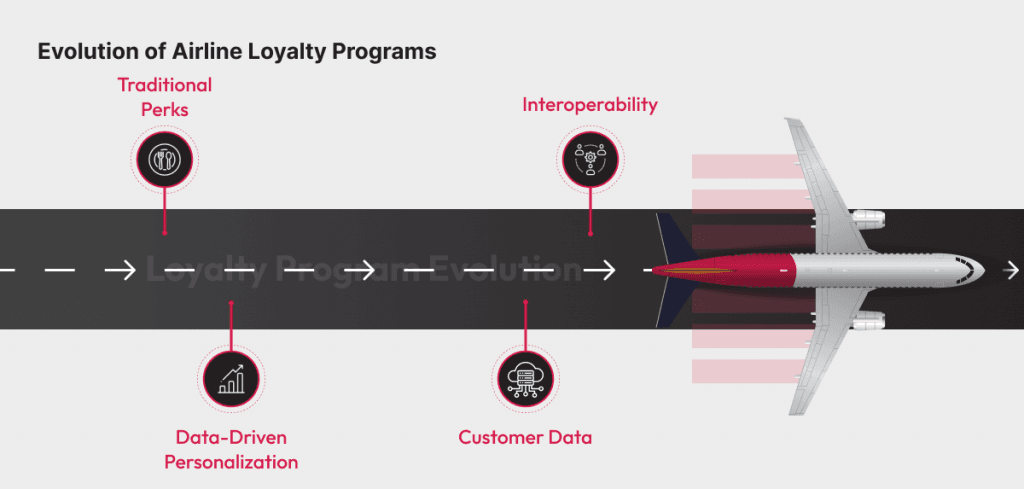
Organizations within and outside the airline industry can achieve interoperability to facilitate operations across multiple geographies. Here are some ways to establish interoperability:
1. Strategic alliances:
2. Add-on benefits:
3. Unified platform:
The benefits of loyalty programs are clear, and when it becomes a universal currency, it has a significant impact. Instead of creating separate points programs, airlines form alliances with businesses across diverse industries. This process expands the loyalty program’s benefits to a broader range of partners, such as banks, retailers, hotels, and cab operators, all within the same alliance.
For instance, the Alaska Airlines Mileage Plan program lets customers earn loyalty points from the airline and various retail partners. These partners include top brands like Sephora, Adidas, FedEx, Disney, and Jimmy Choo. Partners can use the loyalty platform to promote and advertise their products/services.
The airline enjoys an enhanced brand image and gains free word-of-mouth advertising on social media. This program extends beyond flight services to other aspects of the overall experience. It also increases engagement, where customers open the app at least once daily to track activities and services.
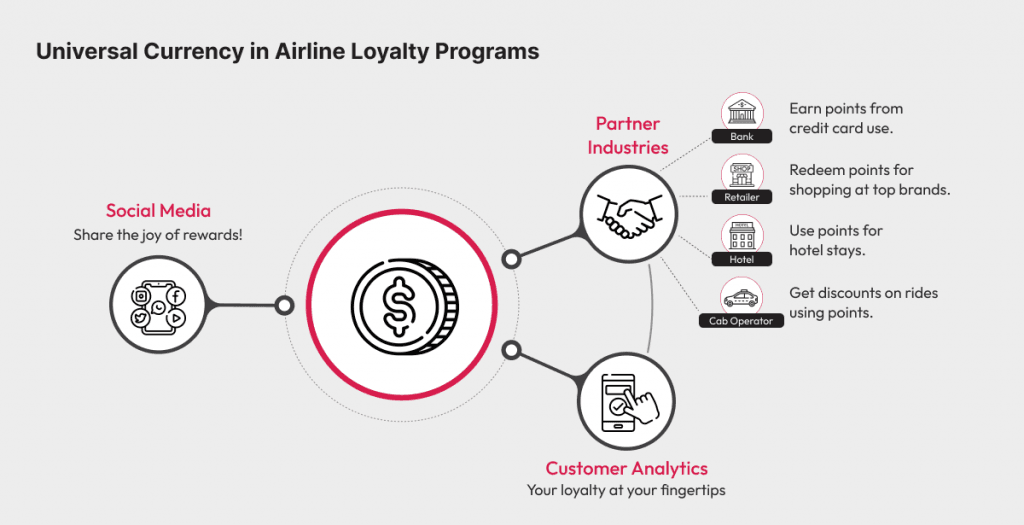
Listed below are a few recommended practices where loyalty points can become universal currency:
Discover our in-depth case study on Akasa Air here and learn about our innovative Digital solutions.
Loyalty programs are undeniably becoming vital in helping airlines expand their wallet share. For instance, customers typically spend more on their trips than just tickets. Yet, through the loyalty program and seamless interoperability, customers now perceive the airline as their comprehensive solution.
Creating partnership ecosystems in travel enables airlines to increase customer revenue while enhancing their overall experience with added value, convenience, and comfort. Mobility-as-a-service offers numerous benefits, including:
These trends are indicative of the future of airline loyalty programs. A technology partner like Robosoft can enable airlines of all sizes with the technology capabilities required at the backend to develop these platforms and open access to data and intelligence. Airlines can then focus on loyalty strategies for high-value customers and leverage customer relationships and alliances to increase profitability.

By Kiran B
Kiran is a Principal Technical Architect at Robosoft, where he heads the Mobile and TV practice. He joined in 2004 and has spent over two decades architecting complex backend platforms and cloud infrastructure at scale, while leading the teams that ship across iOS, Android, and TV. He's especially drawn to developer experience: tightening CI/CD pipelines and finding where AI tooling genuinely earns its place in an engineering workflow. When he isn't shipping, he's usually dissecting Apple's platform decisions or shaving another minute off a build.

RESOURCES
Automotive OTA Updates: Building Scalable Platforms for Software-Defined Vehicles
By KaliCharan Manchikanti
AI in Travel: Enterprise Use Cases Across Booking, Operations and Customer Experience
By Janardhana T
More Models, Fewer Decisions: How to Scale AI Adoption Without Scaling the Bill
By Simon Matar
We are seeing the same pattern with our clients. Once AI adoption reaches a certain point, costs rise faster than the annual budget can absorb. So what drives these costs, and how do you keep adoption going without the budget...
Engineering
Human
Experiences
Let’s get in touch
We craft intuitive digital products that blend user-centric design with robust technology. From UX/UI to full-stack development, we help brands turn ideas into scalable solutions.