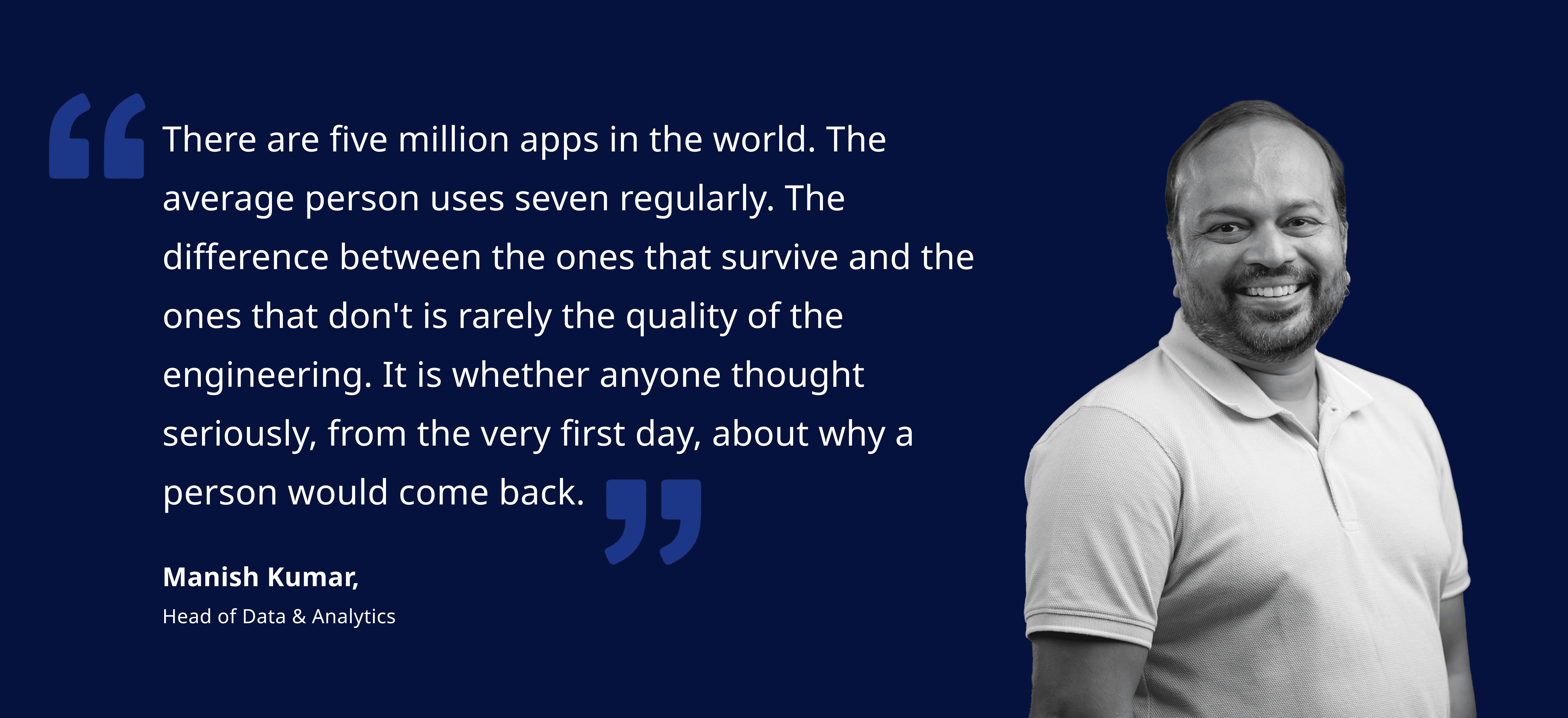
The average person has approximately 80 apps on their phone. They use seven of them regularly. That gap between installed and used is the defining challenge of mobile product development today, and the industry talks about almost everything except it.
The conversation around mobile app development is overwhelmingly focused on launch: how to build faster, how to ship more features, how to drive downloads in the first week.
But downloads are not a measure of a successful mobile product. Return visits are. Session frequency is. Mobile app engagement is the metric that actually matters. The moment someone opens your app unprompted, because it has become genuinely useful to them, is the moment you have succeeded. Most apps never reach that point, because they were built for launch day rather than for the day after.
80 Average apps installed on a person's phone
7 Apps the average person uses regularly
Day 2 When retention, not downloads, becomes the only metric that matters
Getting two things right
Every mobile product has to succeed twice. First at launch, where the measure is downloads and first impressions. Then in the weeks that follow, where the measure is whether people return. The second is harder, it's where mobile app engagement strategy is actually won or lost, and it demands different decisions made earlier than most teams make them.
Most product teams handle launch well. The onboarding is considered, the first impression is strong, and the release goes smoothly. What is less frequently addressed is what the product needs to be on day thirty, day ninety, day three hundred. Those questions must be answered before the first line of code is written not after the first version ships.
What AI means for mobile app engagement
The conversation around AI in mobile development has been dominated by features: AI-powered search, AI-generated content, AI assistants embedded in the interface. These are not unimportant. But they are not where AI has its most significant impact on mobile app user retention.
The most powerful thing AI does in a mobile product is change how the app behaves between sessions. It analyzes what a user did, what they abandoned, and what they returned to, then uses that understanding to make the next session feel more relevant and more personal than the last.
That capability has to be built into the architecture of the product from the outset. It cannot be layered effectively onto an experience that was never designed to support it.
The core question
The apps winning on retention today were conceived from the beginning around one central question: how does this product become more valuable to this specific person the more they use it? That question shapes the data architecture, the mobile app personalization logic, the onboarding design, and the decisions about what to surface and when. None of these can be retrofitted.
What the first sprint determines about year two
The decisions made in the first two weeks of a mobile product project cast a longer shadow than most teams acknowledge at the time. Architecture decisions made before a single line of code is written determine whether the product can personalize at the individual level two years later or whether it remains constrained by a data model never designed for that purpose. Design decisions made in the first sprint determine whether the experience feels intuitive, or whether it accumulates small moments of friction that compound over time into abandonment.
Case study - Invesco Mutual Fund platform
When Robosoft rebuilt the Invesco Mutual Fund mobile platform, the brief was not simply to improve an existing app, it was to build something that investors would actively choose to return to. That required rethinking the product from the data layer upwards, not redesigning the surface while leaving the foundations unchanged.
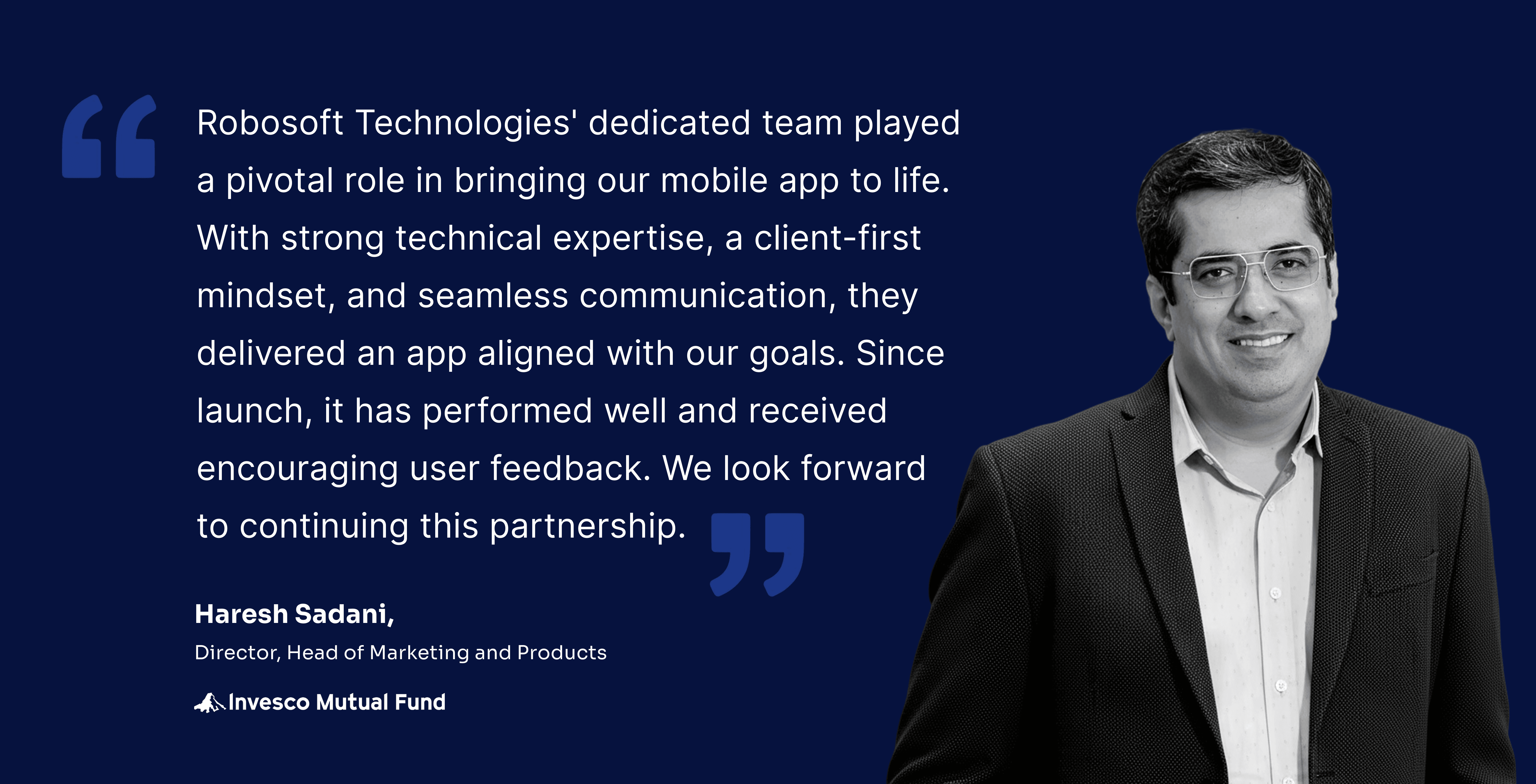
The result: a 3x increase in downloads within six months and 800,000 monthly active users, sustained through the quality of the experience rather than ongoing acquisition spend.
The difference between an app that sustains 800,000 monthly active users and one that declines after the launch spike is almost never visible in the finished product. It lives in the decisions made before the product existed.
Why the handoff model produces forgettable products
There is a structural challenge in how most mobile products are built that the industry rarely addresses directly. The typical engagement model separates design, engineering, and AI into distinct phases or distinct teams. Design hands off to engineering. Engineering hands off to a data or AI team. Each discipline optimizes for its own output rather than for the coherence of the whole experience.
The result is a product where the design is sound, but the engineering compromises it, or where the engineering is solid, but the AI layer was never given the data architecture it needed to function effectively. The gaps between disciplines accumulate into an experience that works but never feels fully considered. And an experience that never feels fully considered is one people leave without a second thought.
The apps that retain audiences almost always reflect deliberate mobile app retention strategies, built by teams where design, engineering, and AI operate as a single discipline from day one. Not handing off to one another. Not optimizing in isolation. Working together under a shared standard of accountability for the finished product.
What building for mobile app engagement looks like
Case study - McDelivery, McDonald's India
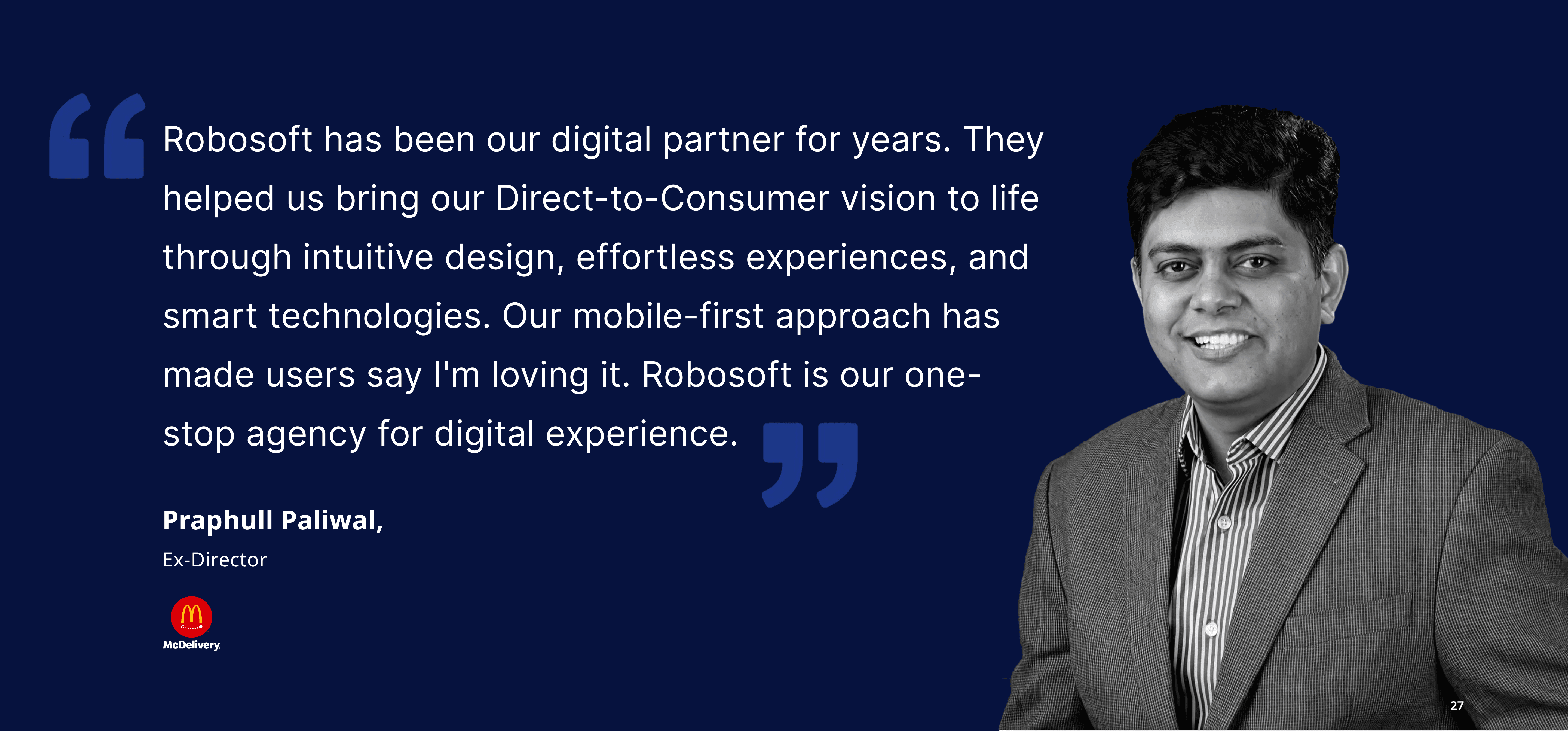
When Robosoft rebuilt the McDelivery platform for McDonald's India, the measure of success was not downloads, it was mobile orders. The question the product had to answer was not how to get people to install the app, but how to make ordering through it the natural choice every time someone is hungry.
That reframe changed the decisions made throughout the project. The onboarding was designed around the first order, not the first impression. The personalization was built around order history and preference. The experience was optimized for the moment of intent, when someone is hungry and wants food quickly, rather than the moment of discovery.
The result: a 55% increase in mobile orders and over 1 million downloads, sustained through repeat behavior rather than acquisition spend.
The question worth asking before the first sprint
Most mobile product projects begin with a feature list or a design brief. The ones that produce apps people return to start with a different question.
Not what does this app do, but why would someone open it tomorrow, having used it today.
The answer to that question determines the architecture, the personalization strategy, the AI integration, the onboarding design, and the metrics by which the product is ultimately judged. Get it wrong, and no amount of feature development or design iteration will compensate.
The apps people return to are not the ones that launched most successfully. They are the ones that were built, from the very first decision, to be worth coming back to.
Robosoft Technologies builds mobile applications for some of the world’s most demanding consumer and enterprise brands, engineering mobile app engagement into platforms driving 55% increases in mobile orders to fintech apps sustaining 800,000 monthly active users. If you are thinking seriously about building a mobile product that earns long-term retention rather than short-term downloads, we would be glad to have that conversation.
Get in touch: [email protected] · www.robosoftin.com