



Blog
Media & Entertainment
15 Oct 2026•5 min read
Why Soccer Fans Keep Leaving Platforms They Actually Like
By Abhishek Hegde
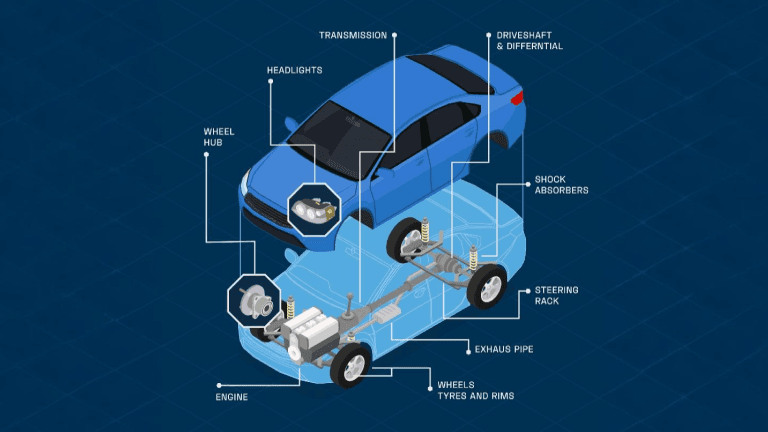
The automotive industry is pivoting to a transformative phase resulting from a shift to electrification, tighter emission regulations, and the growing complexity of vehicle software. By 2030, the share of electric cars is set to surpass 40% in overall car sales. So, automotive OEMs and Tier 1 suppliers experience increased pressure to deliver optimized, robust EV (electric vehicle) powertrain systems faster and at less cost. Consequently, optimizing automotive powertrain systems has become a critical process that organizations must keep in check to enhance vehicle performance and ensure compliance with stringent environmental regulations.
Model-Based Design (MBD) is an engineering methodology in which mathematical models are used to design, simulate, verify, and validate the behaviour of powertrain systems before hardware implementation. It enables the use of digital twins on top of integrated simulations to facilitate iterative design and testing in a virtual environment.
This article explores how Model-Based Design changes automotive powertrain development, delivering measurable ROI to engineering organizations while supporting long-term digital transformation initiatives like Model-Based Systems Engineering (MBSE) and digital twins.
The powertrain—comprising the internal combustion engines (ICE), transmission, and drivetrain—is the heart of any vehicle. Optimizing its performance is a balancing act involving emissions compliance, fuel efficiency, cost control, and consumer satisfaction. Traditional development methods rely heavily on physical prototypes and sequential testing and are increasingly inadequate. They are slow, expensive, and prone to late-stage discovery of faults.
Model-Based Design is an engineering methodology in which mathematical models are used to design, simulate, verify, and validate the behaviour of powertrain systems before hardware implementation. It enables the use of digital twins and integrated simulations and facilitates iterative design and testing in a virtual environment.
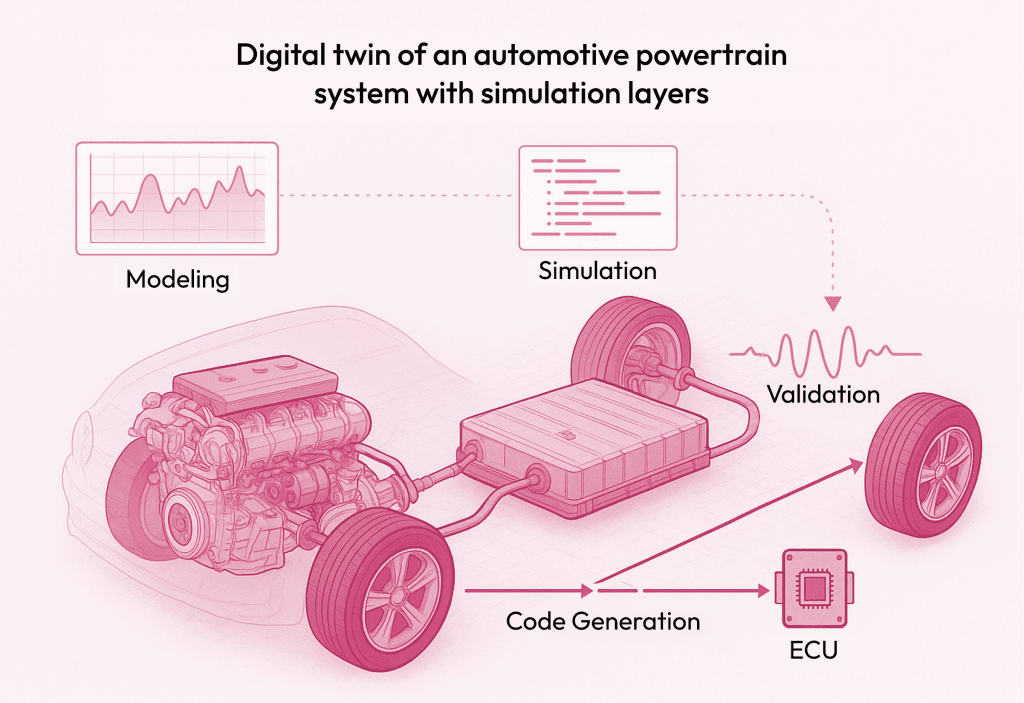
At the core, it involves:
Consider a manufacturer that designs and builds a hybrid electric powertrain. A traditional method would likely involve constructing several prototypes to evaluate different power distribution strategies, thermal management, and emissions compliance.
With MBD:
This approach reduces the need for physical testing and enables the rapid exploration of “what-if” scenarios, such as varying battery sizes or electric motor configurations.

The advantages of MBD are apparent, but its implementation involves overcoming both organizational and technical hurdles.
Top executives play a significant role in overcoming this barrier. Investment in training, provision of cross-disciplinary collaboration, utilization of offshore engineering, and flexible, scalable MBD tools will ensure a smooth transition.
Model-Based Design stands out as an engineering methodology and a competitive differentiator in the ever-increasing competition for intelligent, green, and software-oriented vehicles. It allows automotive companies to bridge the gap between concept and production to innovate powertrain systems with high safety or compliance.
Simulation and automation embedded at the centre of powertrain development offer transformational value to engineering leaders through reduced costs, faster delivery, and futureproofing of their mobility systems for the next decade. As a trusted partner in Embedded Engineering solutions, we enable Automotive OEMs, innovators, and Tier 1 suppliers to harness the power of simulation for high-performance powertrain design innovation.

By Noorullah A

RESOURCES
By Abhishek Hegde

By Abhishek Hegde

By Ivan Pinto
Most conversations about AI delivery focus on what the delivery partner brings to the engagement. The methodology, the toolchain, the engineering practice, the governance standards. We have written elsewhere about what Robosoft brings, and about the standard we have built ARIA around.
Engineering
Human
Experiences
Let’s get in touch
We craft intuitive digital products that blend user-centric design with robust technology. From UX/UI to full-stack development, we help brands turn ideas into scalable solutions.