



Blog
Travel & TransportationData & AI
5 Nov 2026•6 min read
AI in Travel: Enterprise Use Cases Across Booking, Operations and Customer Experience
By Janardhana T

Today, consumers have greater control over their financial journeys. Therefore, banks must adapt to customers’ evolving needs by providing seamless, end-to-end experiences.
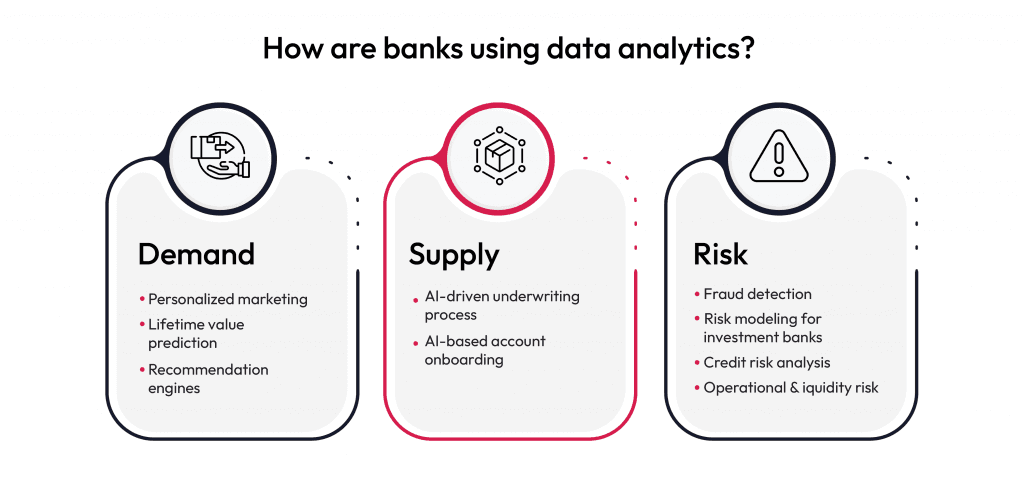
Data plays a critical role in this transformation. Robust data foundations enable banks to efficiently assess transaction details, stakeholder information, payment processing, compliance, and documentation. Given the increasing use of smartphones and the constantly evolving fintech landscape, it is important to focus on addressing three key areas:
Now, let’s dive into how predictive analytics can assist in achieving these objectives.
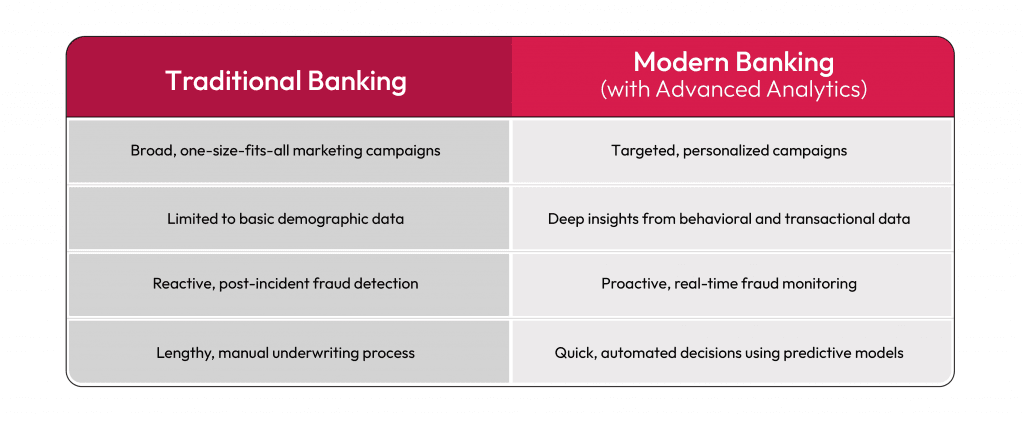
Prebuilt predictive analytics platforms aim to enhance personalization. But these platforms continuously fall short due to constantly changing customer behavior.
Banks need real-time analytics capabilities which helps them understand spending patterns linked to major life or financial events, enabling banks to predict and implement the next best actions (more on this in the next section).
Creating real-time predictive models allows banks to tailor hyper-personalized offers, recognizing the unique motivations behind each customer’s activities and events. This approach ensures more accurate and relevant customer engagement, ultimately driving better results for the customer and financial institution.
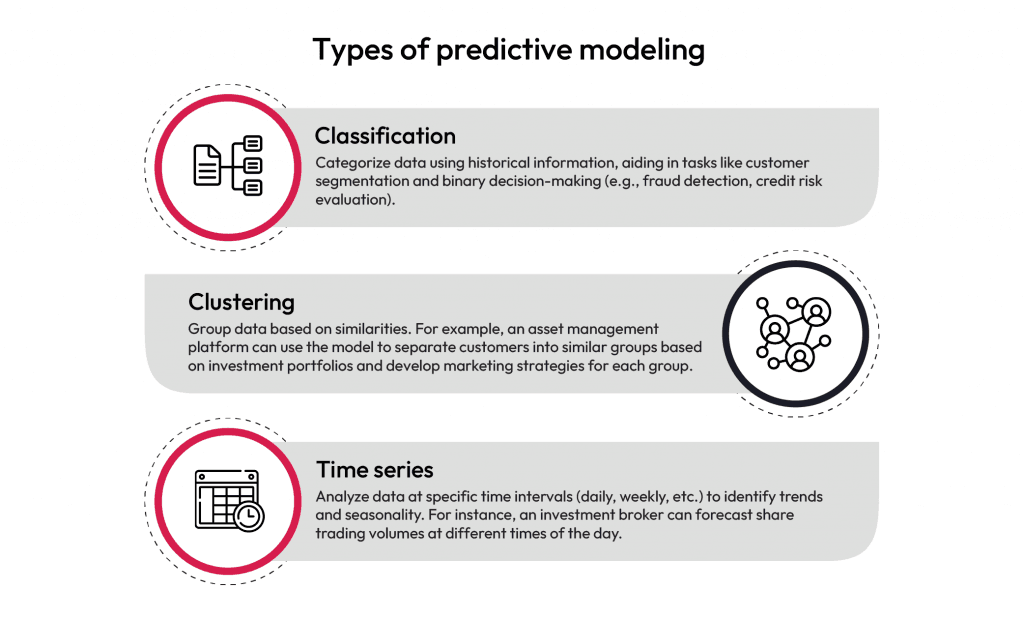
Predictive modeling automates targeting, minimizing manual data analysis and dependence on human intuition. Here are a few common types of predictive models:
Predictive analytics in BFSI offers significant benefits for leadership aiming to boost profitability and efficiency:
Banks understand the necessity of establishing a top-notch customer experience. However, many still have crucial operational data confined within legacy IT systems.
Banks and NBFCs are embracing experience-led banking by analyzing customer data from digital banking activities, customer interactions, and transaction records. They use transactional, behavioral, and demographic details. Integrating data from both digital and physical channels is crucial for creating a comprehensive customer profile (360-degree view) and omnichannel experience.
Hyper-personalization is driving a 75% increase in customer engagement in one of our BFSI projects at Robosoft, as shown in the image below.
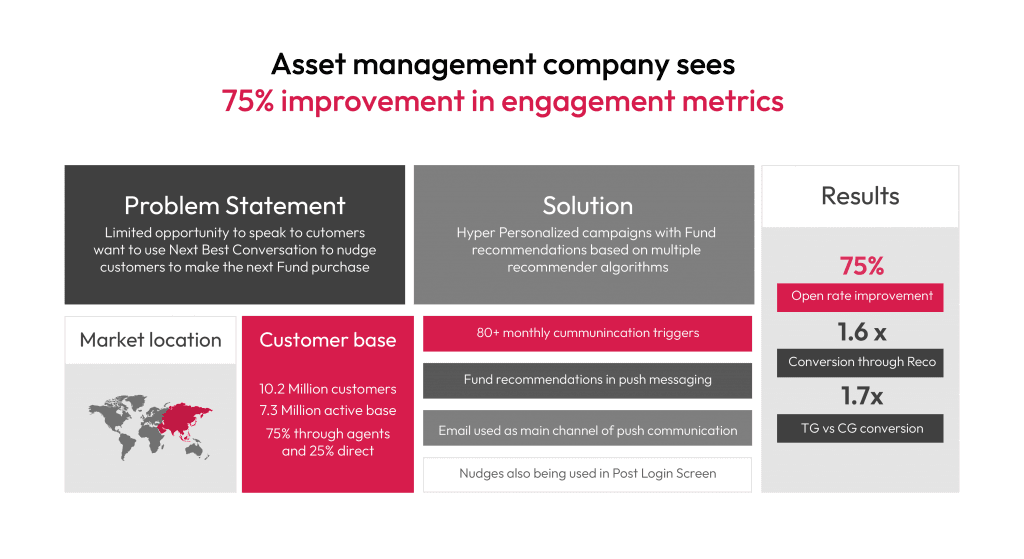
The next best action model (next best offer) uses AI to suggest the most appropriate decision or action for each customer interaction. We have published a detailed blog on building best-in-class recommendation systems – save it for later reading.
In contrast to the past, today’s customer journeys are non-linear and highly dynamic due to frequently changing personal financial situations. Banks can significantly improve results by proactively addressing customer needs with suitable alternatives.
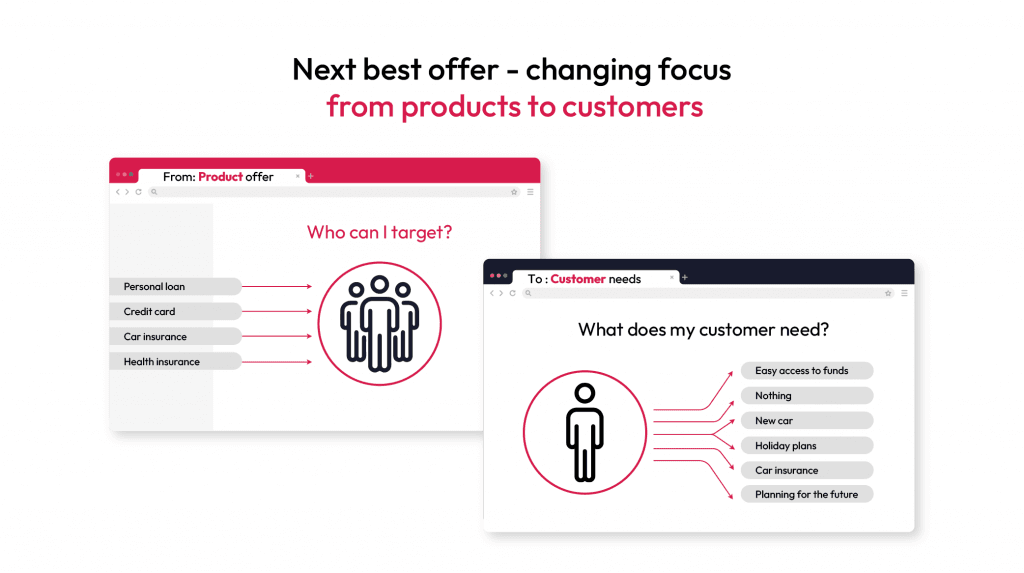
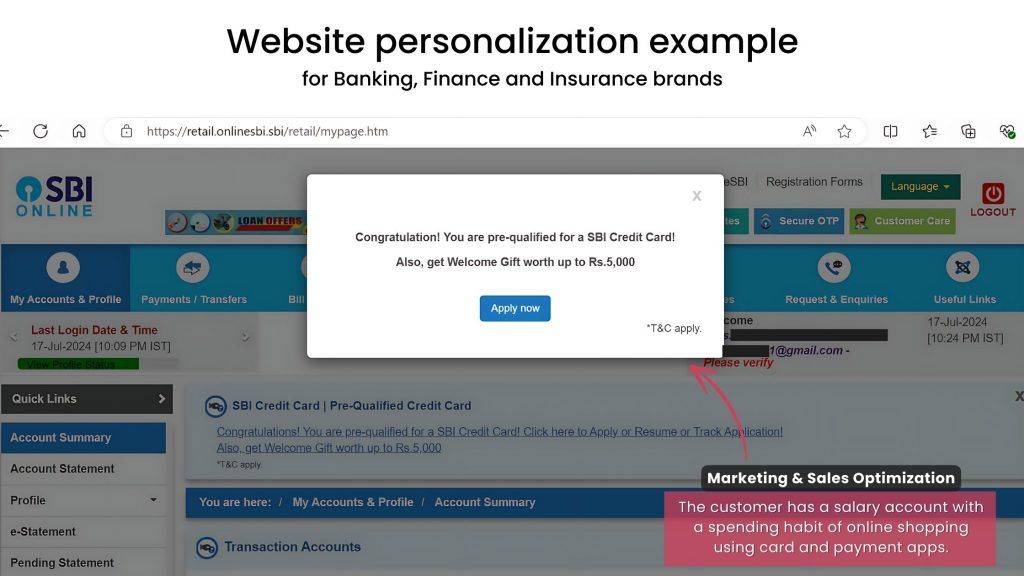
BFSI brands can use predictive analytics to improve website personalization, thereby increasing onboarding completion rates and decreasing drop-offs. Brands can nurture long-term relationships by providing guidance and support during the setup process.
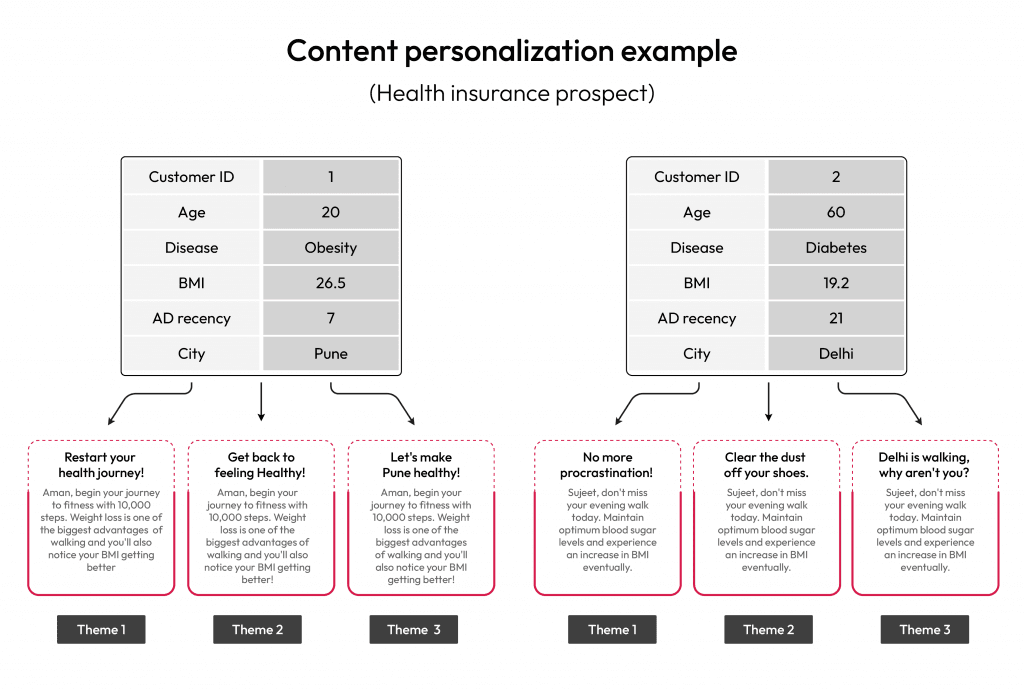
Tailored messages, such as reminders for bill payments, updates on loan qualification, credit card offers, or information about nearby branch locations based on past transactions and browsing history, have the potential to re-engage inactive customers and enhance overall engagement and conversions. Same goes for mobile app personalization.
The growing demand for super apps, embedded finance, and personalized services has prompted banks to upgrade their digital banking platforms.
To leverage predictive analytics effectively, banks must update their application environment. Key steps include aligning IT and business initiatives, unlocking core systems, securely integrating data, and optimizing APIs through automation. By following this approach, banks can tap into previously unused capabilities to deliver seamless digital experiences much faster.
Many financial institutions have established AI and machine learning innovation centers to enhance data utilization through predictive analytics. This shift requires building in-house capabilities or collaborating with external tech partner to develop advanced fintech products and tailored digital experiences.

By Manish Kumar Babul

RESOURCES
AI in Travel: Enterprise Use Cases Across Booking, Operations and Customer Experience
By Janardhana T
More Models, Fewer Decisions: How to Scale AI Adoption Without Scaling the Bill
By Simon Matar
We are seeing the same pattern with our clients. Once AI adoption reaches a certain point, costs rise faster than the annual budget can absorb. So what drives these costs, and how do you keep adoption going without the budget...

The Software-Defined Vehicle Reset: How OEMs Must Rebuild for the Next Decade
By KaliCharan Manchikanti
Engineering
Human
Experiences
Let’s get in touch
We craft intuitive digital products that blend user-centric design with robust technology. From UX/UI to full-stack development, we help brands turn ideas into scalable solutions.