



Blog
Media & Entertainment
8 Oct 2026•6 min read
The Broadcast Is Not the Test. It Is the Result of the Test.
By Abhishek Hegde
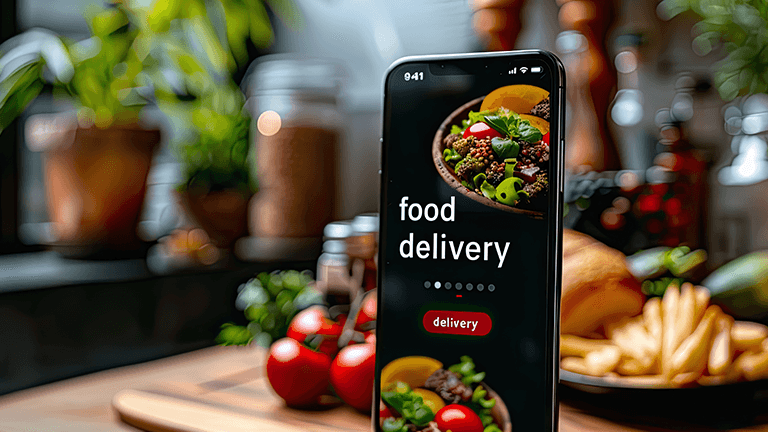
More than half of US consumers believe that ordering delivery and takeout from restaurants is an “essential part of their lifestyle”. The trends would be along similar lines across the globe. In some countries, ordering 3-6 times a week is common among the 25-34 age group. While ordering food delivery via third-party aggregator apps or websites is common, a significant number opt to order directly through a restaurant’s website or app .
Aggregator platforms provide initial reach, but also restrict branding, charge high commissions, and limit direct customer engagement. Food ordering via one’s own website or mobile app makes business sense for restaurant and QSR chains. A user-centric approach and digital experiences that prioritize customer needs are a critical need for such an initiative. The starting point for this journey is service design.
Service design is all about creating an experience that aligns with customer needs and preferences. It is about thoughtfully designing processes, touchpoints, and interactions that align with those expectations. It also involves understanding how customers interact with your app or website – from browsing menus to placing orders and tracking deliveries.
Effective service design takes into account every element involved in the ordering process, including digital and physical environments, employee-customer interactions, and all service touchpoints. The real value of service design comes from involving all stakeholders in the process. Through collaborative efforts, such as design thinking workshops, businesses can gather diverse perspectives and incorporate them into the design process.
A well-designed food ordering system can turn peak-hour chaos into a streamlined operation and meet evolving customer preferences. Here are a few benefits that can introduce your restaurant to new customers.
Customers are more likely to share bad experiences than good ones. Therefore, it’s essential for QSR brands to continually optimize their app design to avoid common pitfalls, such as:
Missing favorites: many QSRs miss the option to allow customers to save and quickly reorder their favorite meals. Without a favorites list, customers are forced to reselect items from scratch, which can lead to longer ordering times. Including a simple “favorites” option enhances convenience and encourages repeat orders.
Visual appeal of food: another common oversight in digital ordering is the absence of photos for some menu items. You don’t order what you don’t see. Providing high-quality images for all menu items creates a more engaging and appetizing customer experience. Brands that prioritize visually appealing menus stand a better chance of attracting and retaining customers.
Lack of customization: customers appreciate the ability to tailor their orders to their preferences, whether that means adding extra toppings, choosing portion sizes, or selecting dietary preferences. For example, features like “Add cooking request” allowing special instructions or additional comments during order customization, make the experience feel more tailored and accommodating.
Limited filtering options: customers value the ability to filter options based on their specific needs, such as distance, fastest delivery time, or even toggle between delivery and pickup options. Many QSR apps overlook this, forcing users to scroll through irrelevant options, which can be time-consuming and lead to missed opportunities for restaurants to capture potential orders. Offering advanced filtering options allows users to make quicker decisions, provide more control and convenience.
Difficulty finding cart: another common challenge users face is the difficulty in locating the cart. When customers are ready to check out, they want easy and immediate access to their cart without navigating through multiple screens. If the cart icon is not clearly visible or accessible throughout the ordering process, it can lead to increased cart abandonment.
We must remember that the customer ordering food online is also a user of several other mobile & app experiences across categories. The intuitive design and user experience of one app or mobile site in one category makes them expect a similar or better experience in all categories.
While mobile apps lead the way in online food delivery, websites remain an essential part of the QSR ecosystem. They offer a convenient platform for users who prefer browsing menus on larger screens or placing orders from desktops, particularly in office settings. Websites also serve as a critical entry point for first-time customers who discover services through web searches.
Customers interacting with your platform expect effortless navigation and mobile optimization to accommodate their fast-paced lifestyles. The layout should be intuitive, with well-organized menus and a responsive design that adapts seamlessly across devices. It’s also crucial to prioritize accessibility by following WCAG guidelines to ensure that all users, including those with disabilities, can easily navigate your platform. This enhances inclusivity and broadens your customer base.
Additionally, visual appeal plays a crucial role in capturing attention. A clean, aesthetically pleasing interface with high-quality images and clear fonts creates a professional, welcoming experience that encourages users to explore further and complete their orders.
Personalization is the key ingredient that transforms casual users into loyal customers by making them feel valued and understood. By analyzing customer data, QSRs can offer personalized recommendations that suggest meals based on:
Additionally, enabling customizable profiles allows users to set preferences, dietary needs and even create profiles for different family members, ensuring that every suggestion or offer feels relevant to their specific needs. Dynamic content further enhances this by adapting menus and promotions in real-time based on user data, making each interaction feel exclusive and relevant. Personalizing the experience ensures that repeat visits become a deliberate outcome of the design strategy rather than a matter of luck.
Customers expect their orders to arrive fresh and fast. Providing real-time order tracking offers transparency and builds trust by allowing customers to follow their order journey from preparation to delivery.
Offering flexible delivery options is another way to elevate customer satisfaction. Whether customers want fast delivery for immediate cravings or more budget-friendly options for larger orders, having a variety of choices ensures their needs are met.
Accuracy in order fulfillment is equally critical. Partnering with reliable delivery services ensures that meals are delivered on time and without errors, building a positive and consistent experience.
Incorporating sustainable practices, such as eco-friendly packaging or fuel-efficient delivery methods, aligns with modern customer preferences and demonstrates a commitment to responsible business practices.
A user-friendly onboarding means effortless app navigation. The goal is to make both processes quick and frictionless by only requesting necessary information, such as an email, delivery address, and payment options. Offering a guest checkout option is especially useful for first-time users, removing the barrier of mandatory account creation and encouraging immediate completion.
Customers appreciate having various payment options, including credit cards, digital wallets like Apple Pay and even Buy-Now-Pay-Later services. Additionally, integrating local payment methods, such as PayPal, builds trust and reduces hesitancy during checkout.
Customer reviews are the modern equivalent of word-of-mouth, influencing the decisions of potential buyers. Displaying positive reviews and testimonials prominently on your platform acts as social proof, encouraging new customers to trust your brand based on the experiences of others.
However, negative reviews shouldn’t be ignored. Addressing them with transparency and professionalism not only resolves customer concerns but also showcases your commitment to improving service quality.
Beyond managing feedback, user-generated content (UGC) like customer-shared photos and videos brings a layer of authenticity to your brand. Additionally, tapping into popular review platforms like Yelp, Google Reviews, and local directories boosts your online visibility and credibility, ensuring your business stands out in the crowded digital landscape.
Building a user-centric online food ordering experiences requires thoughtful planning, design thinking, feature-rich development, and seamless integration. Our design practice also places a strong emphasis on emotional design, creating digital experiences that resonate deeply with users, evoking feelings of joy, trust, and excitement. These human-centric emotional pillars, along with empathy, form the foundation of our product design approach.
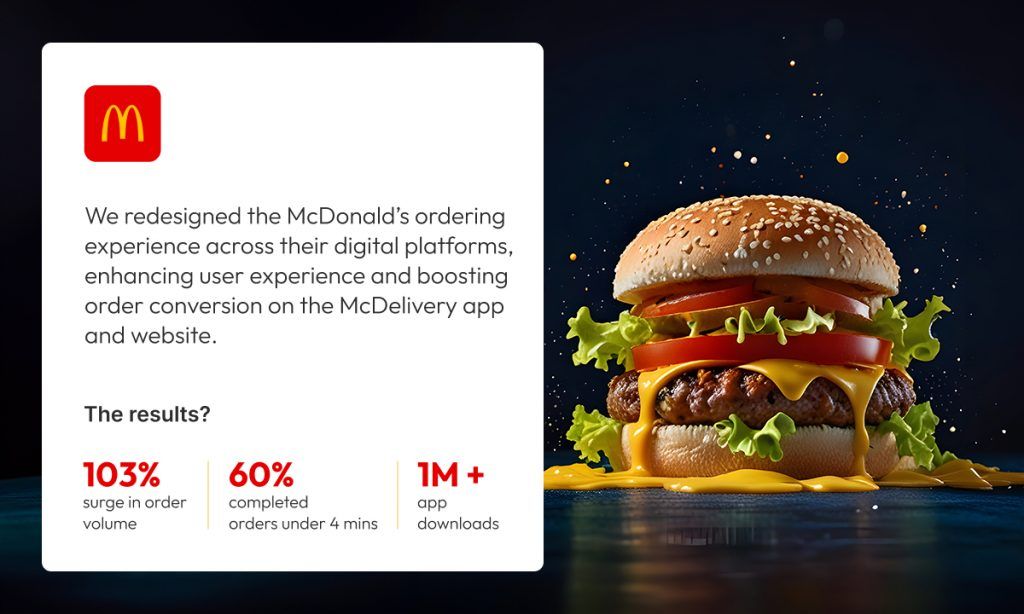
At Robosoft, we have gained insights into consumer behaviour in online food ordering after extensive work in the category including a complete UI/UX revamp of McDonald’s web & app (which resulted in 103% increase in orders via the mobile platform), a unique website for ARK Restaurants allowing for reservations for 22 of their outlets across the US and a last-mile delivery platform for food delivery brands in the Middle East, among others.
We are an Experience Engineering company offering a full suite of services in digital product design & development. We are recognized as a Top Product Design Company, and a Top User Experience Company, and are committed to helping you create a delightful QSR digital platform that enhances that builds customer engagement, loyalty and your bottom line. Delicious, isn’t it?

By Vikram Kalle

RESOURCES
By Abhishek Hegde

By Ivan Pinto
Most conversations about AI delivery focus on what the delivery partner brings to the engagement. The methodology, the toolchain, the engineering practice, the governance standards. We have written elsewhere about what Robosoft brings, and about the standard we have built ARIA around.

By Srinidhi Rao
Most organizations evaluating AI delivery partners are asking the wrong question. They tend to ask which tools a firm uses, when the question that actually matters is what standard the firm is operating to.
A tool is a productivity bump. A standard is what shapes whether the work compounds or stays flat. It is, in our experience, much of why AI projects fail to move past the productivity bump. Firms producing genuinely different outcomes with AI today are doing so because the same operating rules run through every decision, every gate and every phase of the work.
Engineering
Human
Experiences
Let’s get in touch
We craft intuitive digital products that blend user-centric design with robust technology. From UX/UI to full-stack development, we help brands turn ideas into scalable solutions.